

Details
Description
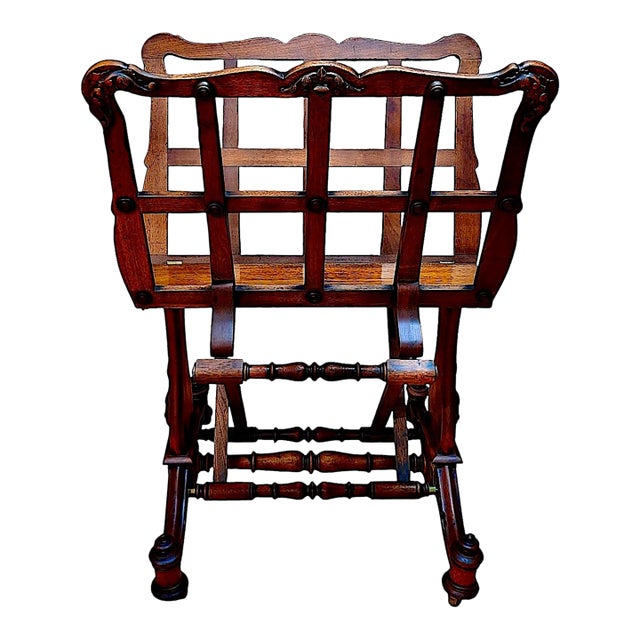
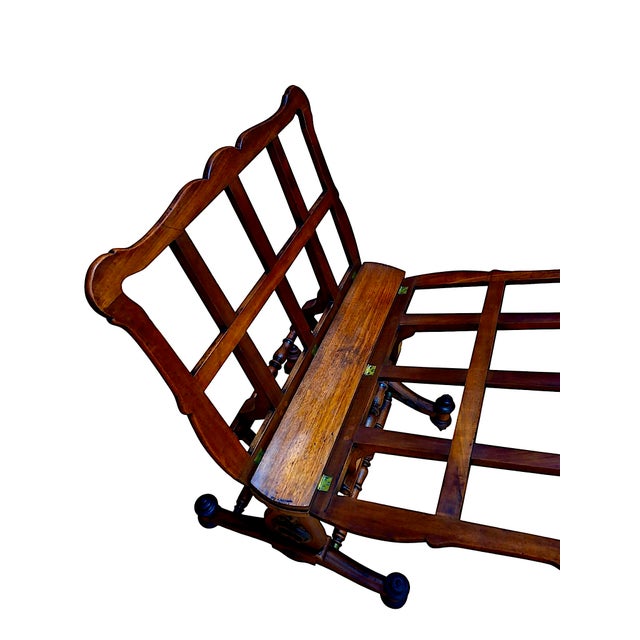
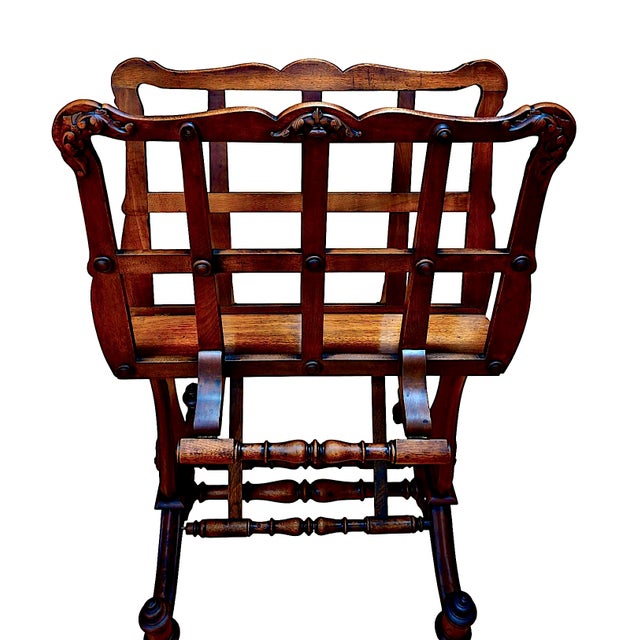
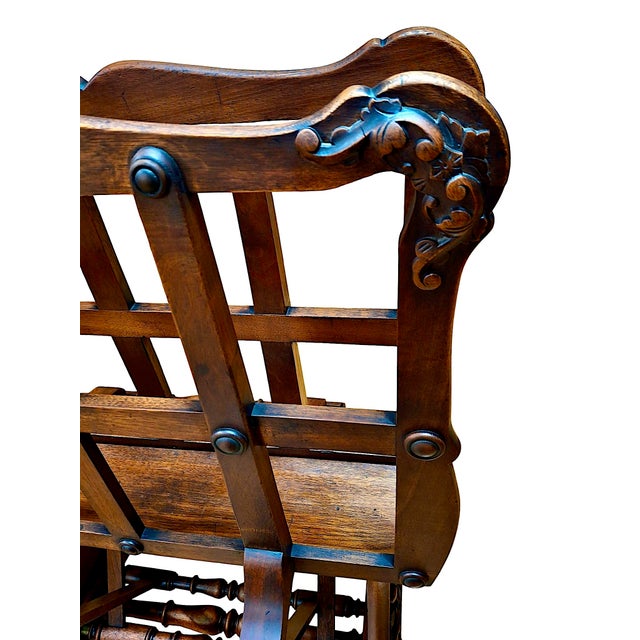
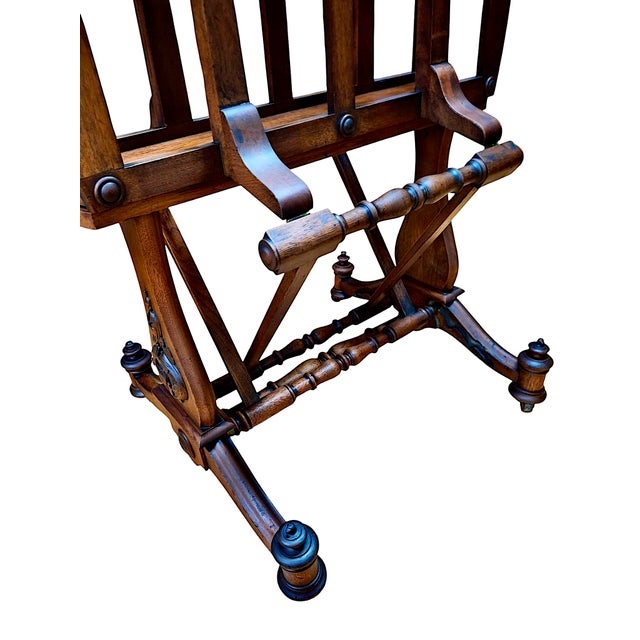
This striking piece of antique furniture is an adjustable folio stand—also known as a Canterbury, a print stand, or a …
Read more
This striking piece of antique furniture is an adjustable folio stand—also known as a Canterbury, a print stand, or a portfolio easel. It is a highly specialized mechanical piece designed for private libraries, art galleries and large homes. This piece was acquired from the estate of Margaret G. Huntington; by descent from the estate of her mother-in-law Marian Prentice Huntington (daughter of American Industrialist Henry E. Huntington).
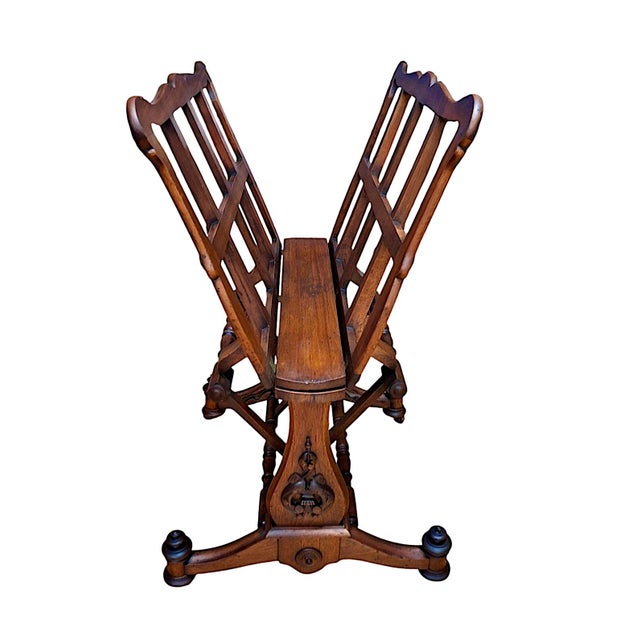
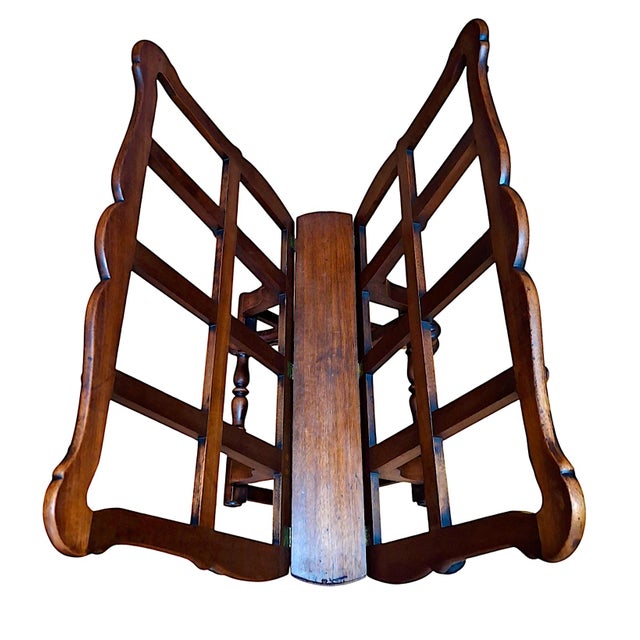
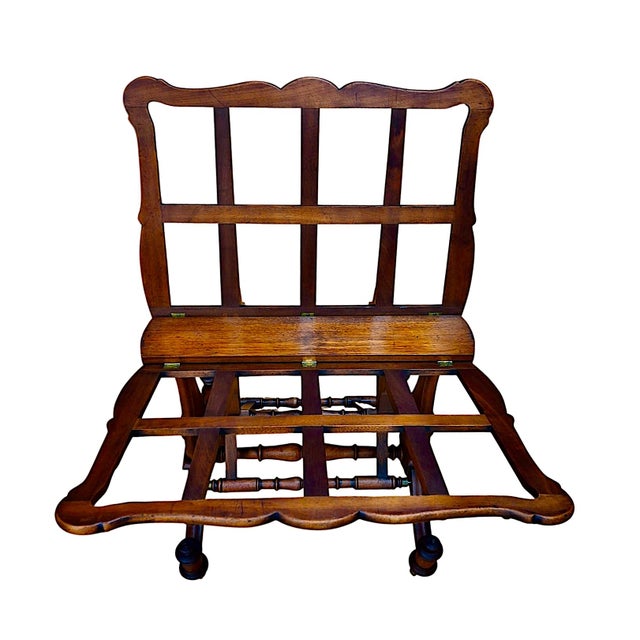
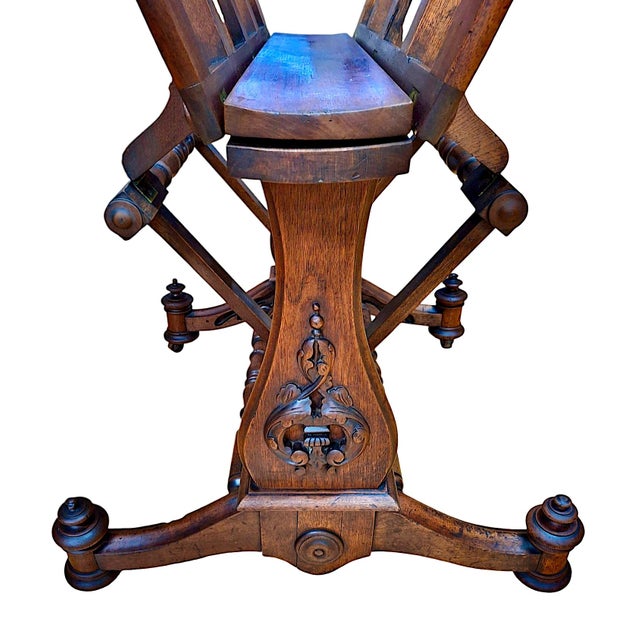
WHAT IT DOES: This stand was explicitly engineered to store and display oversized, heavy paper works. This included large-scale folios, loose art prints, architectural blueprints, maps and engravings. The mechanism allows one or both sides to drop completely flat. This converted the storage V-trough into a flat table-height surface, letting someone safely flip through fragile prints without bending the paper.
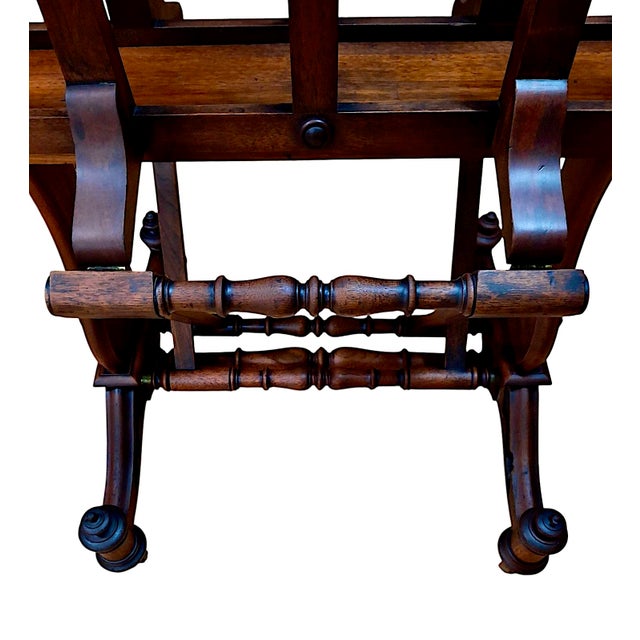
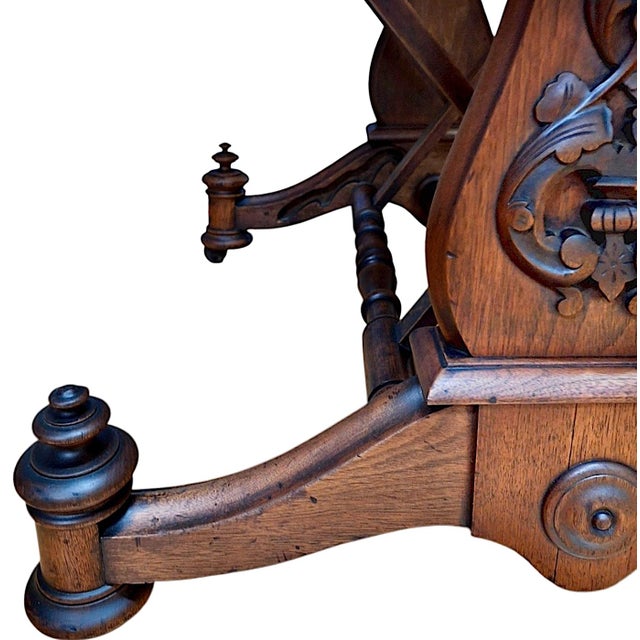
HOW IT WORKS: The stand achieves its flexibility through a clever combination of hinges, levers, and interlocking wood turnings. The two slatted side frames are secured to the central spine with heavy-duty brass butt hinges. Thick, flat-milled wooden brace bars link the moving sides to the central base. The cleverest part of the engineering is the series of horizontal, bobbin-turned dowels sitting below the trough. These act as locking stops. As you pull the sides outward, the diagonal bracing arms slide along or notch into these turned elements, allowing the user to lock the angle of the V-shape or drop the panels down safely.
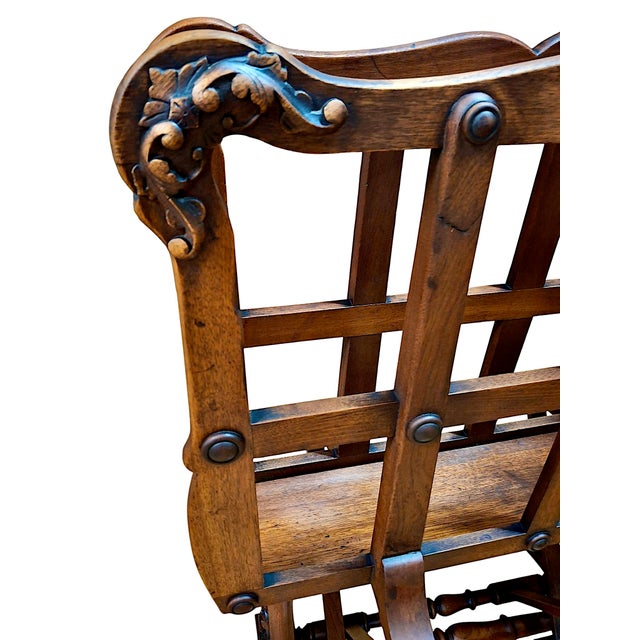
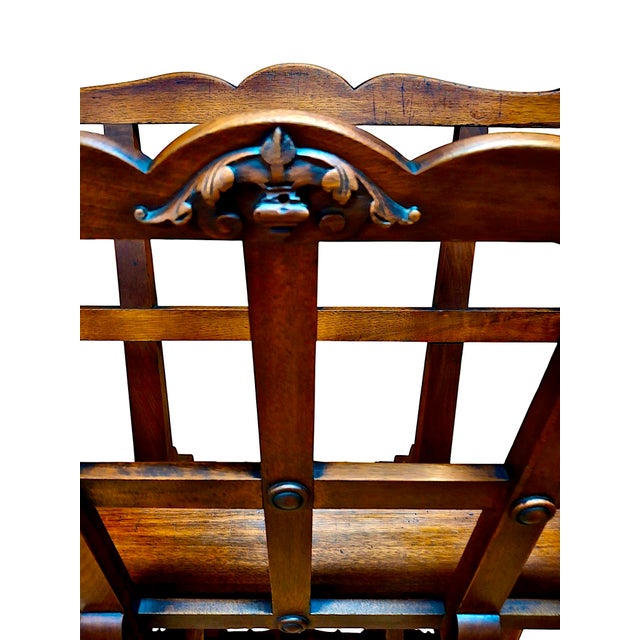
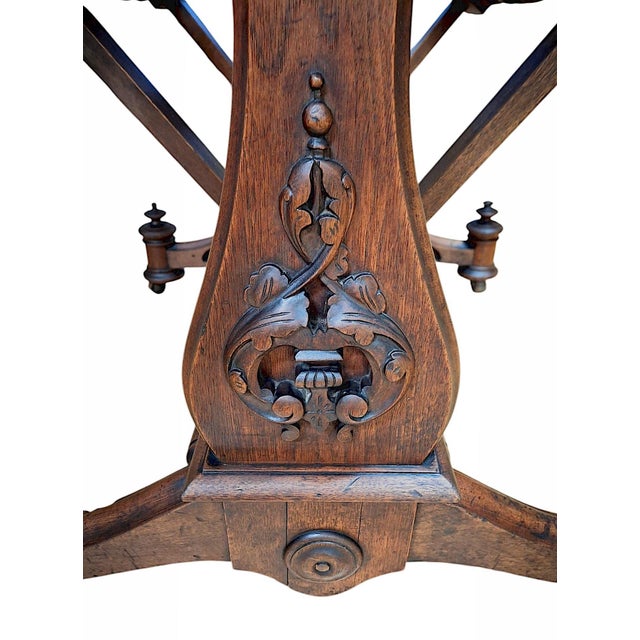
STYLE & MATERIAL: This piece was crafted in the Renaissance Revival style, heavily drawing from 17th-century French and Flemish designs. The deeply carved foliate scrolls on the corners and top centers, the prominent central vase/scroll relief carving on the pedestal base, and the architectural turned finials on the feet all express this style. However, this is 19th-century Victorian-era-made work, likely dating between 1870 and 1890. It is a product of the historicism movement rather than the Renaissance period itself; specialized mechanical portfolio stands did not exist in this form in the 1600s.
The stand rests on casters, is made of high-quality mahogany and is finished with a dark, rich historic stain.
Signature/Maker’s Mark: Nonexistent. Provenance: Documentation available.
See less
- Dimensions
- 29.5ʺW × 25ʺD × 42ʺH
- Styles
- Renaissance Revival
- Period
- Late 19th Century
- Country of Origin
- United States
- Item Type
- Vintage, Antique or Pre-owned
- Materials
- Brass
- Mahogany
- Condition
- Good Condition, Original Condition Unaltered, Some Imperfections
- Color
- Chestnut
- Condition Notes
- Signature/Maker’s Mark: Nonexistent. Provenance: Documentation available. Signature/Maker’s Mark: Nonexistent. Provenance: Documentation available. less
Questions about the item?
Returns & Cancellations
Return Policy - All sales are final 48 hours after delivery, unless otherwise specified in the description of the product.
Cancellation Policy - Prior to shipping or local pickup, buyers may cancel an order for up to 48 hours, unless otherwise specified.