

Details
Description
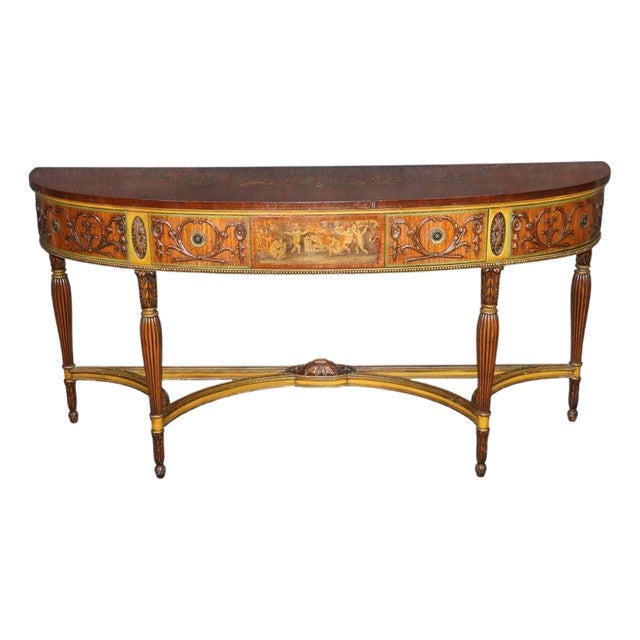
This exceptionally elaborate English paint-decorated demi-lune sideboard, in the Adam taste, is a striking expression of the refined Neoclassical aesthetic …
Read more
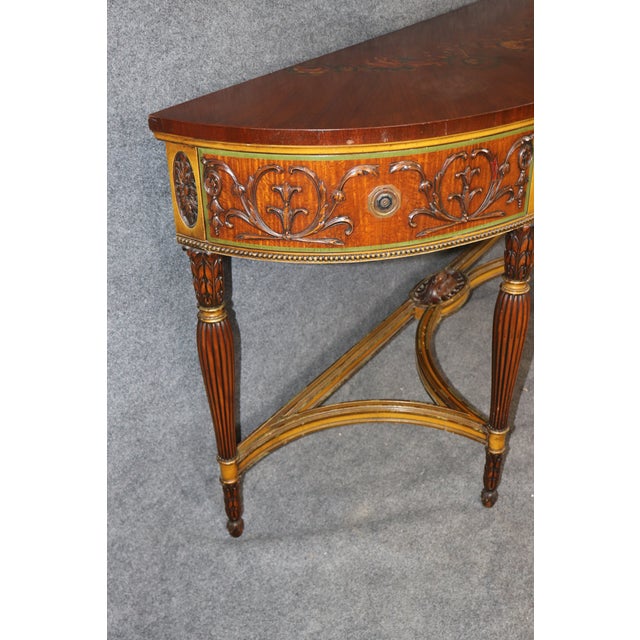
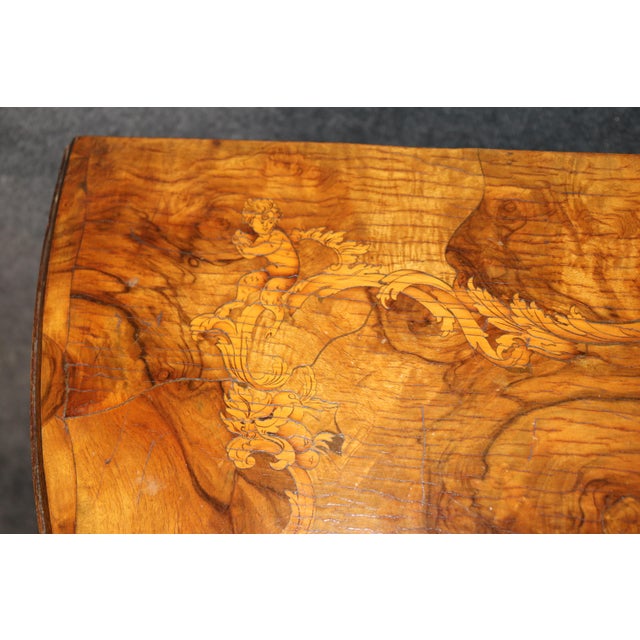
This exceptionally elaborate English paint-decorated demi-lune sideboard, in the Adam taste, is a striking expression of the refined Neoclassical aesthetic that transformed British furniture and interior decoration during the late eighteenth century. With its elegant semicircular form, richly ornamented frieze, painted figural decoration, carved details, and unusually graceful stretcher arrangement, the sideboard was conceived not merely as functional dining-room furniture but as an important decorative component of a sophisticated architectural interior.
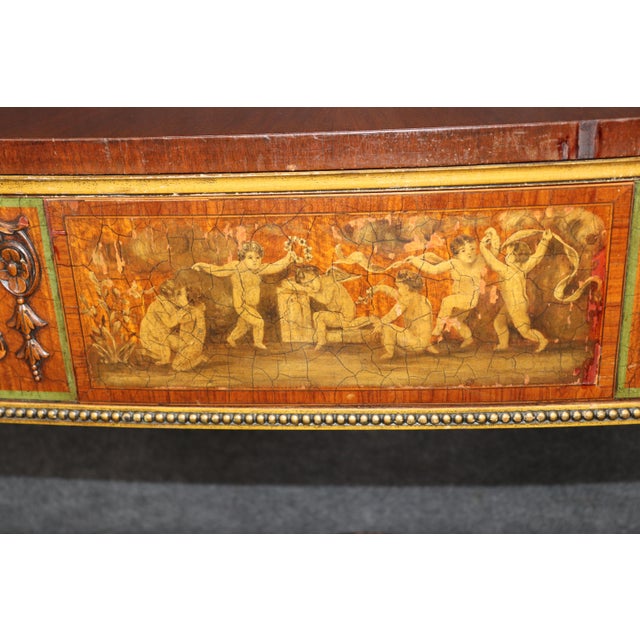
The broad demi-lune top follows the fashionable semicircular profile favored in the Neoclassical period. Its restrained surface provides a deliberate visual counterpoint to the extraordinary richness of the apron beneath. The deep frieze is organized architecturally into a sequence of painted and carved panels outlined with contrasting borders. At its center is a finely rendered classical figural scene, populated by numerous figures and recalling the antique-inspired compositions, allegories, and mythological subjects that were central to the Adam decorative vocabulary. This pictorial panel serves almost as a miniature painting incorporated directly into the architecture of the furniture.
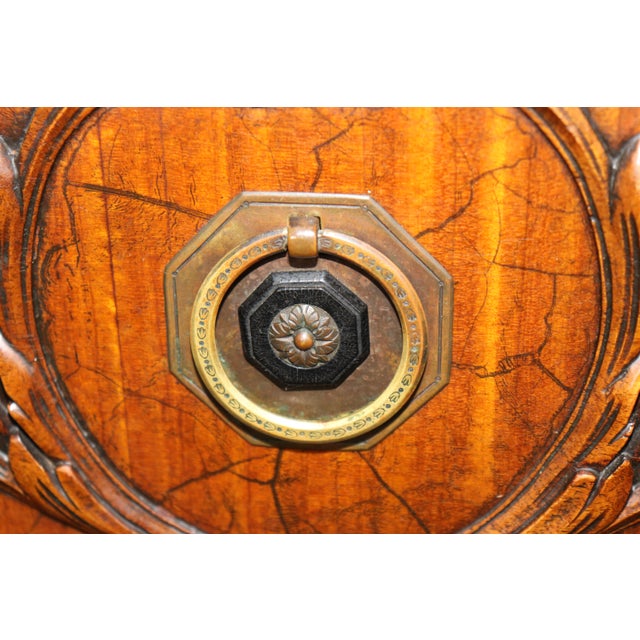
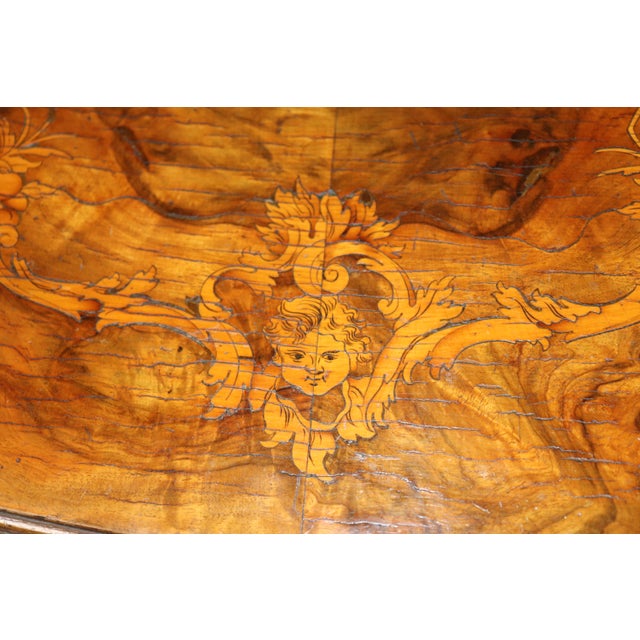
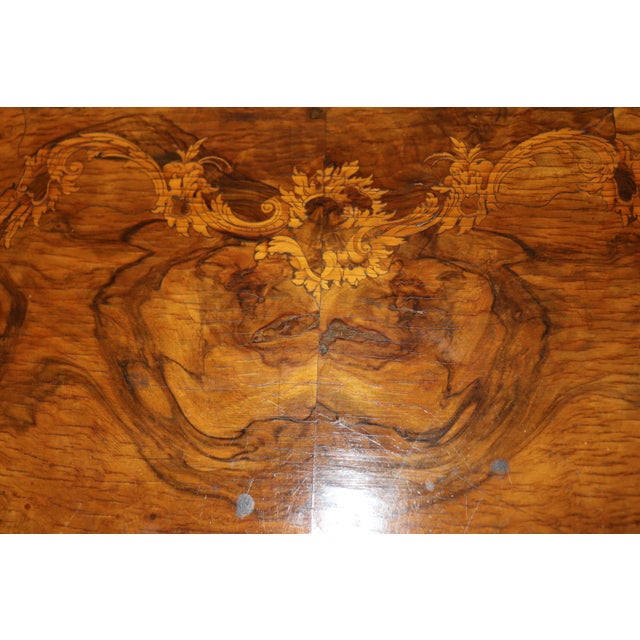
To either side, the frieze becomes increasingly ornamental. Graceful scrolling foliage, stylized anthemia, circular paterae, floral devices, and delicate arabesques are arranged symmetrically against warm ochre, russet, and golden grounds. Oval carved or painted medallions punctuate the composition, while narrow green and gilt borders emphasize the sideboard's horizontal sweep. Particularly effective is the interplay between painted decoration and relief carving, which gives the façade unusual depth and complexity. The result evokes the richly decorated ceilings, wall panels, and furniture schemes associated with the interiors designed by Robert Adam and James Adam.
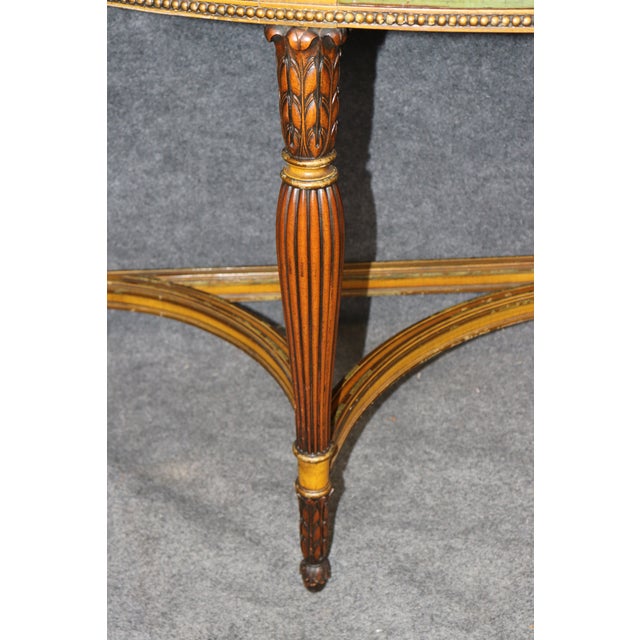
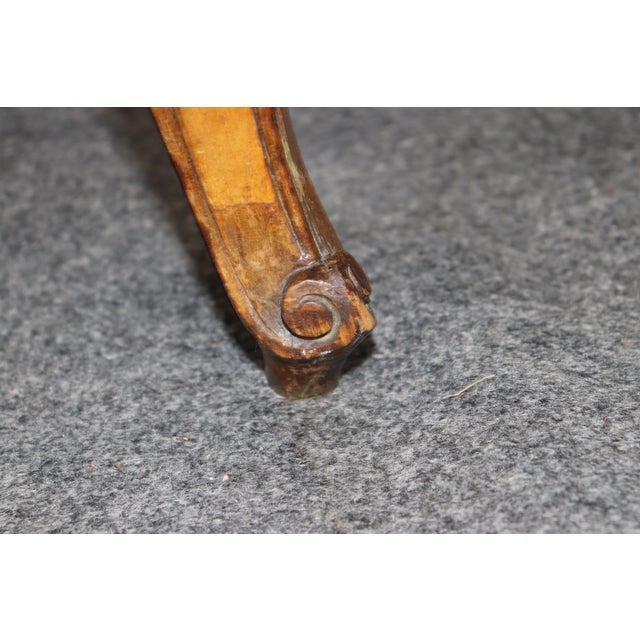
The sideboard is raised on six exceptionally elegant supports. The principal legs are slender and tapering, with deeply fluted shafts surmounted by carved foliate sections and enriched with gilt collars. Smaller carved elements terminate the legs near the floor, reinforcing the vertical rhythm while preserving the delicacy characteristic of late Georgian furniture. Their elongated proportions prevent the heavily ornamented upper section from appearing ponderous.
One of the most distinctive features is the elaborate curved stretcher system joining the legs. Sweeping members converge toward a central carved ornament, producing a series of shallow arches beneath the case. This unusual construction gives the lower portion of the sideboard an almost architectural character and creates a graceful visual counterbalance to the broad semicircular top.
The design belongs to the tradition established by the Scottish-born architect Robert Adam (1728–1792), whose interpretation of antiquity profoundly influenced British taste. Adam advocated unified interiors in which architecture, plasterwork, carpets, furniture, and decorative objects participated in a single harmonious scheme. His characteristic vocabulary included classical figures, urns, paterae, anthemia, arabesques, delicate foliage, and carefully controlled symmetry—all elements reflected in this sideboard.
With its sophisticated combination of Neoclassical form, painted classical imagery, carving, gilded accents, and exceptionally elaborate ornament, this demi-lune sideboard represents the sumptuous end of the Adam-style tradition. Its remarkable decorative program transforms a practical serving piece into an architectural work of art, embodying the elegance, archaeological imagination, and cultivated luxury of the finest English Neoclassical interiors.
Dimensions: 39.25 inches high x 80 inches wide x 24.5 inches deep
See less
- Dimensions
- 80ʺW × 24.5ʺD × 39.25ʺH
- Styles
- Louis XVI
- Period
- 1920s
- Country of Origin
- France
- Item Type
- Vintage, Antique or Pre-owned
- Materials
- Paint
- Wood
- Condition
- Good Condition, Original Condition Unaltered, Some Imperfections
- Color
- Brown
- Condition Notes
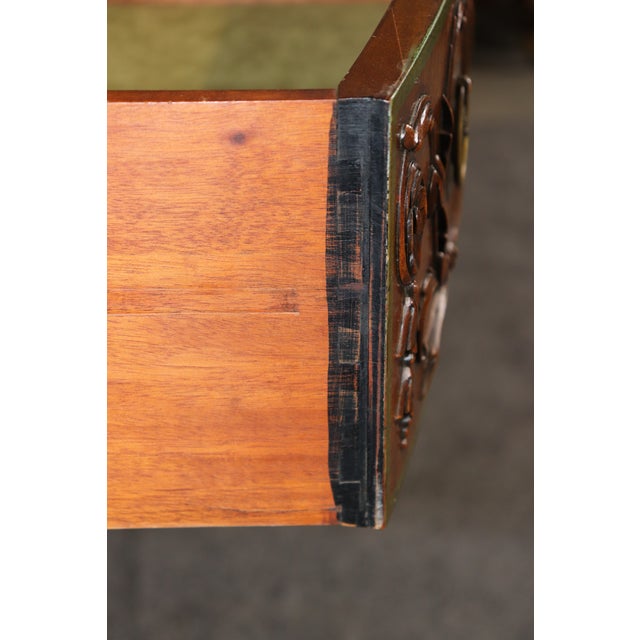
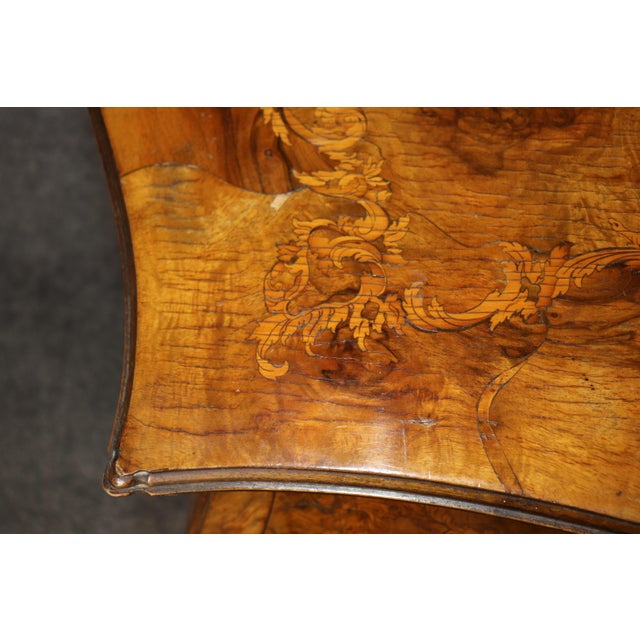
- The piece is in good antique/vintage condition with the exception of some light surface scratches, Minor finish loss and normal … moreThe piece is in good antique/vintage condition with the exception of some light surface scratches, Minor finish loss and normal age related wear. As to be expected with items of age and use. Please see photos for areas that may need attention less
Questions about the item?
Returns & Cancellations
Return Policy - All sales are final 48 hours after delivery, unless otherwise specified in the description of the product.
Cancellation Policy - Prior to shipping or local pickup, buyers may cancel an order for up to 48 hours, unless otherwise specified.
Related Collections
- McGuire Credenzas and Sideboards
- Charles Limbert Credenzas and Sideboards
- Jacaranda Credenzas and Sideboards
- Murano Glass Credenzas and Sideboards
- Danish Modern Rosewood Credenzas and Sideboards
- Adrian Pearsall Credenzas and Sideboards
- Jentique Credenzas and Sideboards
- Concrete Credenzas and Sideboards
- Mid-Century Modern Walnut Credenzas and Sideboards
- Mustard Credenzas and Sideboards
- Drexel Credenzas and Sideboards
- Thomasville Credenzas and Sideboards
- Marble Credenzas and Sideboards
- Baker Furniture Company Credenzas and Sideboards
- Mid-Century Modern Credenzas and Sideboards
- Jacobean Credenzas and Sideboards
- Stanley Furniture Credenzas and Sideboards
- Henredon Credenzas and Sideboards
- Burlwood Credenzas and Sideboards
- Broyhill Credenzas and Sideboards
- Century Furniture Credenzas and Sideboards
- Teak Credenzas and Sideboards
- Ethan Allen Credenzas and Sideboards
- Brutalist Credenzas and Sideboards
- Louis XVI Credenzas and Sideboards