






Cheshire Antiques Consultant LTD
Chester, Cheshire West and Chester
Since 2021100+ sales
3x Super Seller

Details
Description
Edward Carter Preston – Domestic Kitchen Geometry: Jug, Pot and Bottle, circa 1925
British Modernist Watercolour with Cubist and Post-Impressionist …
Read more
Edward Carter Preston – Domestic Kitchen Geometry: Jug, Pot and Bottle, circa 1925
British Modernist Watercolour with Cubist and Post-Impressionist Influences
Description
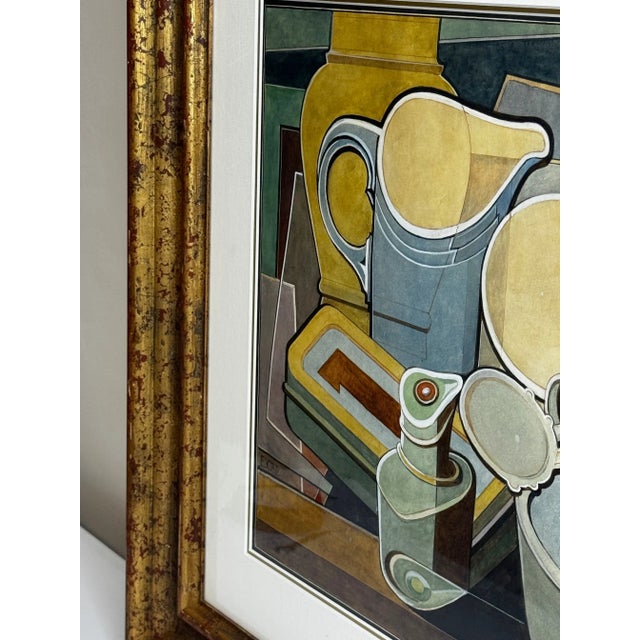
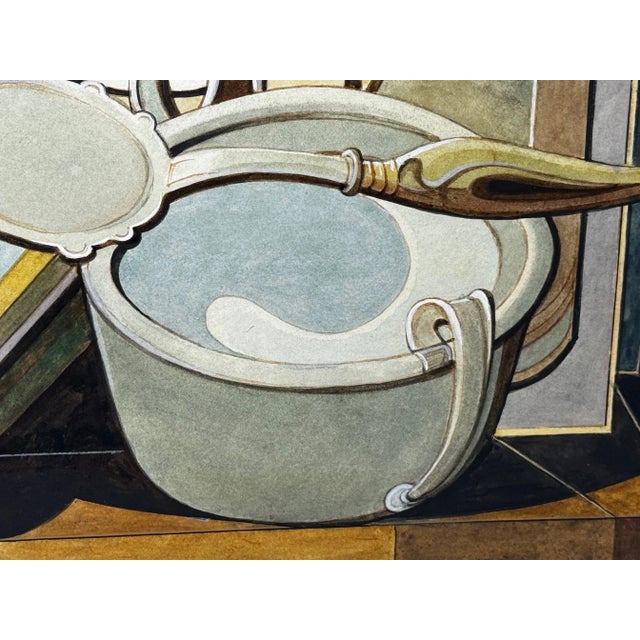
A fascinating circa-1925 British modernist watercolour by Liverpool artist Edward Carter Preston (1884–1965), depicting a jug, cooking pot, bottle, spoon and other domestic vessels within a carefully constructed geometric composition.
Initialled “E.Cr.P.”, the work demonstrates Preston’s ability to transform everyday objects into an exploration of form, proportion and pictorial space.
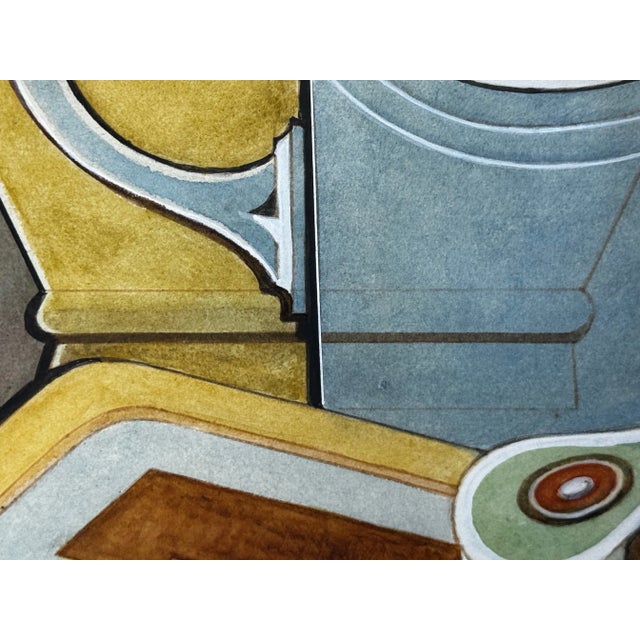
The vessels remain recognisable, yet their forms are reduced towards ellipses, cylinders and angular planes. Transparent washes of ochre, sand, celadon, muted blue and grey give the composition a restrained and sophisticated palette.
The work is especially interesting in the context of Preston’s documented engagement with British and European modernism. He was closely associated with Liverpool’s progressive Sandon Studios and developed strongly coloured Post-Impressionist watercolours under the influence of painter Gerard Chowne.
His work was exhibited at the Sandon in 1911 alongside works associated with Roger Fry’s first Post-Impressionist exhibition, while later research records Preston’s admiration for Paul Cézanne and his approach to underlying form.
A contemporary 1912 review recognised Preston’s assimilation of Post-Impressionist simplification and abstract design, making the modernist character of the present watercolour part of a much longer artistic development.
Rather than orthodox French Cubism, the work is best understood as an individual British modernist response to Post-Impressionist and Cubist ideas concerning structure and form.
Artist
Edward Carter Preston was a Liverpool-born sculptor, painter and medallist whose career encompassed painting, sculpture, medallic design, decorative glass, printmaking and architectural sculpture.
He achieved national recognition through his winning design for the First World War Next-of-Kin Memorial Plaque, popularly known as the “Dead Man’s Penny”.
He subsequently undertook extensive sculptural work for Liverpool Anglican Cathedral following his association with Sir Giles Gilbert Scott.
Preston remained engaged with modernism throughout his career, with later sculptural work showing influences associated with Barbara Hepworth and Henry Moore.
Provenance
From a relative of Edward Carter Preston.
Direct family provenance prior to its first documented market appearance.
Offered by a notable North West auction house in September 2025, with the original auction label retained verso.
The work has subsequently been curated and catalogued by Cheshire Antiques Consultant LTD® and exhibited at the Famous Lord Hill Museum, Shropshire, within a presentation of British modernist and interwar works.
Presentation
Professionally mounted using acid-free materials.
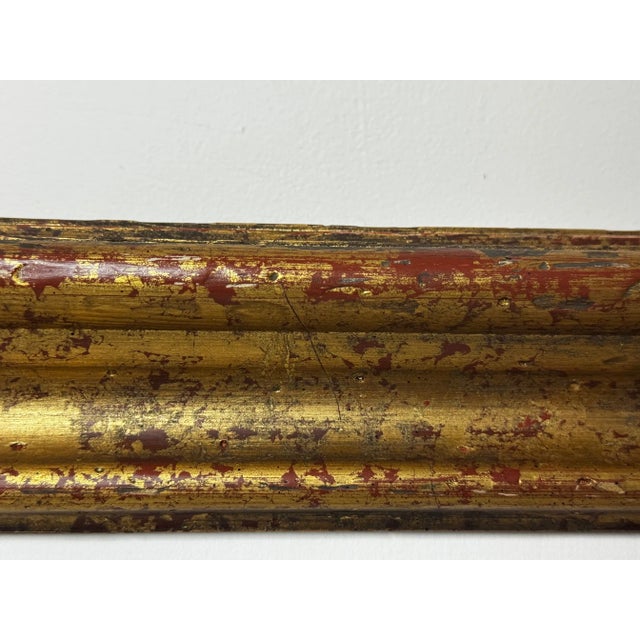
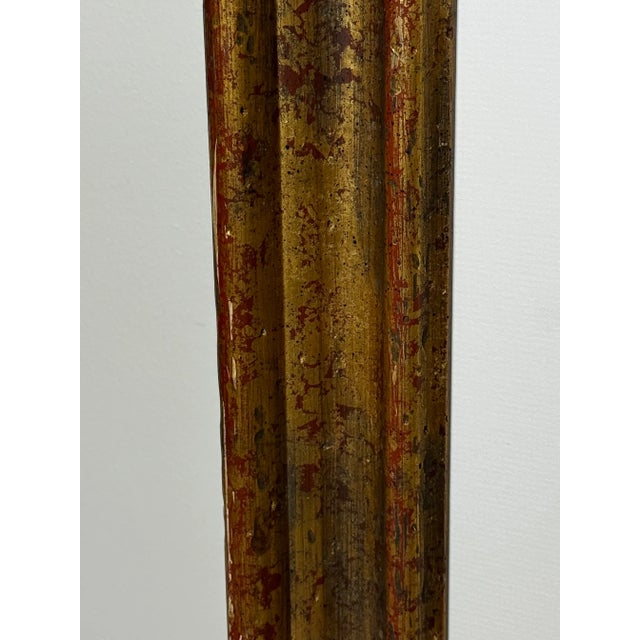
Larson-Juhl distressed-finish frame.
AR70 anti-reflective glass.
Dimensions
Artwork: approximately 42 cm × 55 cm.
Framed: approximately 80.5 cm × 66.5 cm × 5 cm.
Research Note
The artist is traditionally published as Edward Carter Preston (1885–1965) in a number of established sources. Subsequent University of Liverpool doctoral research records his birth certificate as confirming 1884. Cheshire Antiques Consultant LTD® therefore catalogues the artist as Edward Carter Preston (1884–1965), while acknowledging the published alternative.
The title *Domestic Kitchen Geometry: Jug, Pot and Bottle* is a modern descriptive title rather than a documented title given by the artist.
See less
- Dimensions
- 31.69ʺW × 1.96ʺD × 26.18ʺH
- Styles
- Cubism
- Frame Type
- Framed
- Period
- 1920s
- Country of Origin
- United Kingdom
- Item Type
- Vintage, Antique or Pre-owned
- Materials
- Glass
- Paper
- Watercolor
- Wood
- Condition
- Original Condition Unaltered, Needs Restoration
- Color
- Teal
- Condition Notes
- Condition Stable pigments with strong chromatic integrity The paper shows signs of aging in some areas, with some mild discolouration … moreCondition Stable pigments with strong chromatic integrity The paper shows signs of aging in some areas, with some mild discolouration — slightly yellowed or browned areas — indicating natural oxidation or light exposure over time Professionally mounted and conservation-framed using acid-free materials and AR70 glass Ready for immediate display. The frame features an applied distressed surface with deliberate chipped and cracked detailing, enhancing its antique aesthetic and complementing the painting’s timeless modernist warmth. less
Cheshire Antiques Consultant LTD
Chester, Cheshire West and Chester
Since 2021100+ sales
3x Super Seller
Questions about the item?
Returns & Cancellations
Return Policy - All sales are final 48 hours after delivery, unless otherwise specified in the description of the product.
Cancellation Policy - Prior to shipping or local pickup, buyers may cancel an order for up to 48 hours, unless otherwise specified.
Related Collections
- Photorealism Canvas Paintings
- Ed Ruscha Paintings
- Photorealism Paintings in New York
- Richard Serra Paintings
- Jo Baskerville Paintings
- Louise Nevelson Paintings
- Karen Offutt Paintings
- Nicola Simbari Paintings
- Herman Miller Paintings
- BDDW Paintings
- Jaanika Peerna Paintings
- Leroy Neiman Paintings
- Jeff Slemmons Paintings
- Vienna Secession Paintings
- Johannes Andersen Paintings
- Pedro Friedeberg Paintings
- Peter Behrens Paintings
- Piet Hein Eek Paintings
- Raphael Paintings
- Carl-Axel Acking Paintings
- Karl-Erik Ekselius Paintings
- Hans Andersen Paintings
- Jean-Paul Barray Paintings
- Cassina Paintings
- Soicher Marin Paintings