

Details
Description
Milton Hebald (American, 1917-2015)
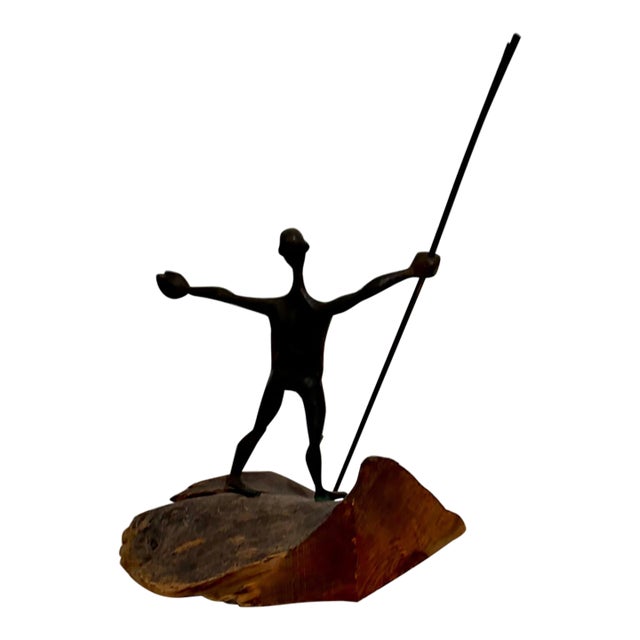
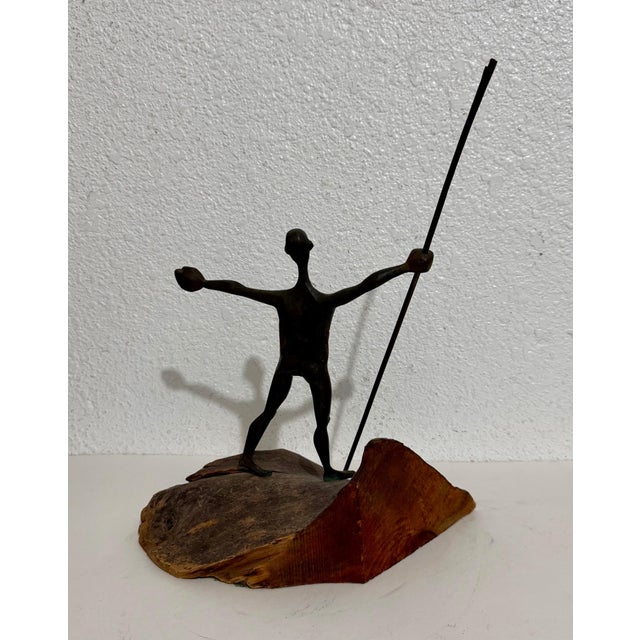
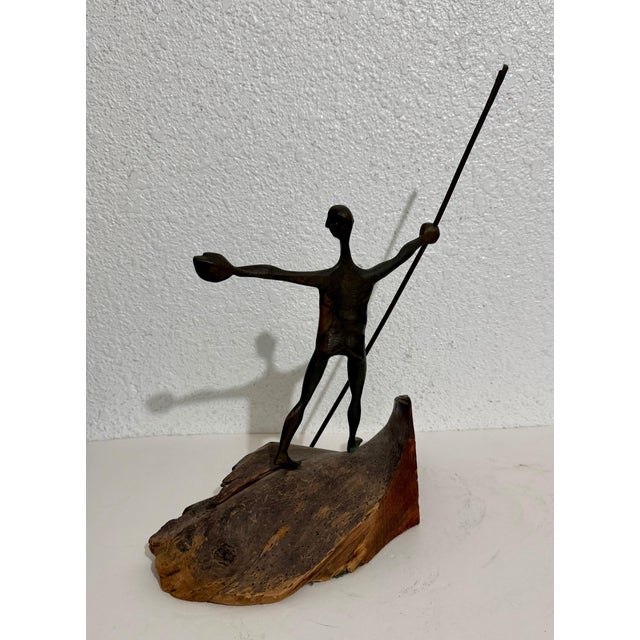
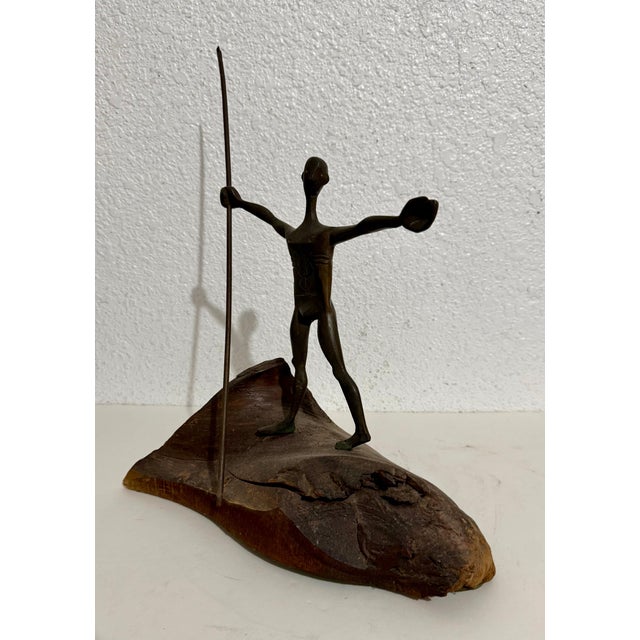
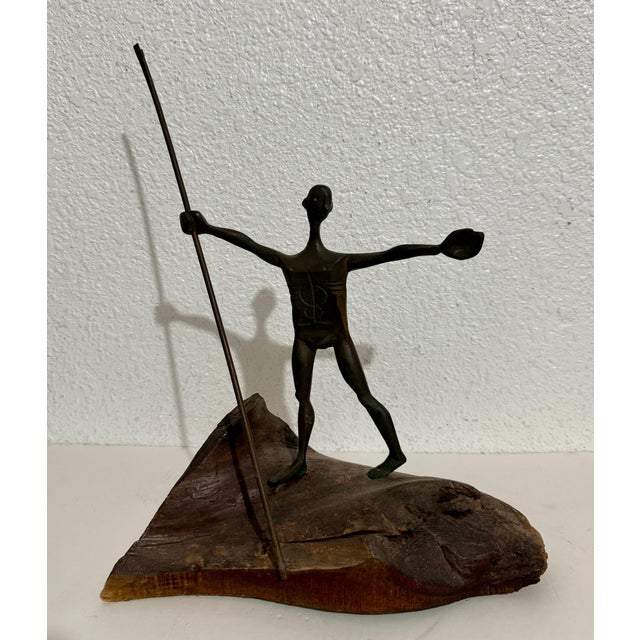
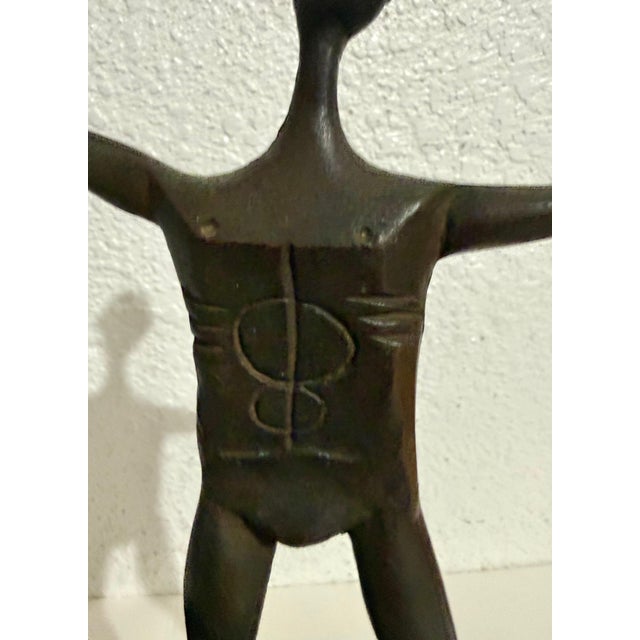
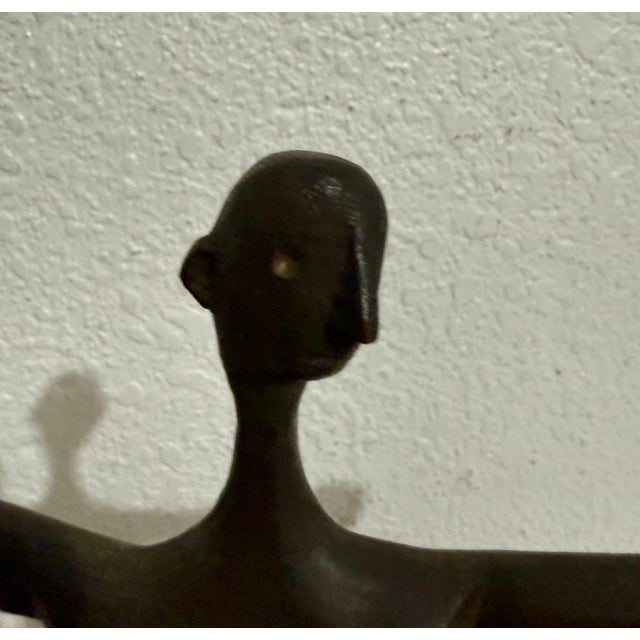
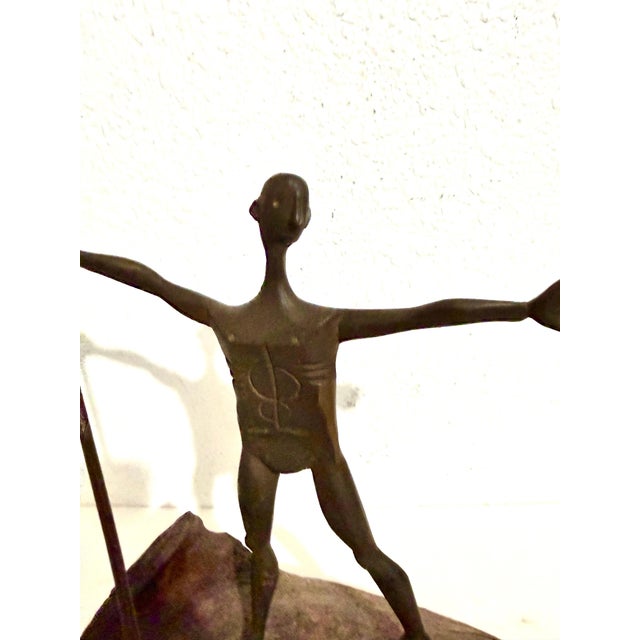
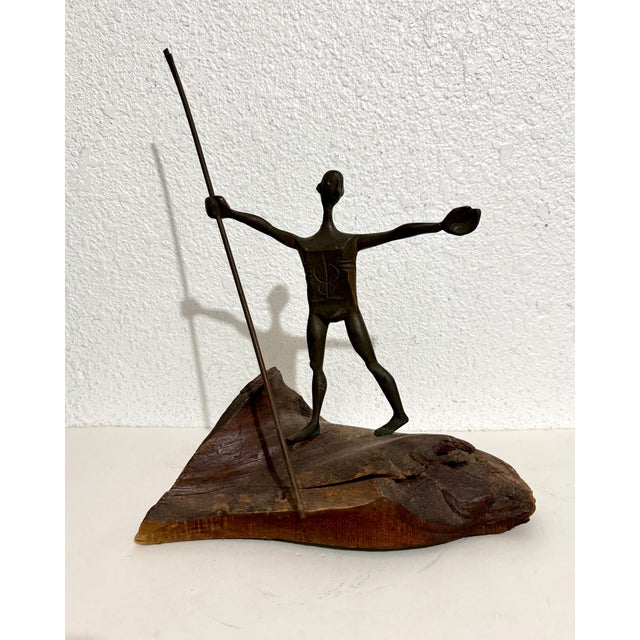
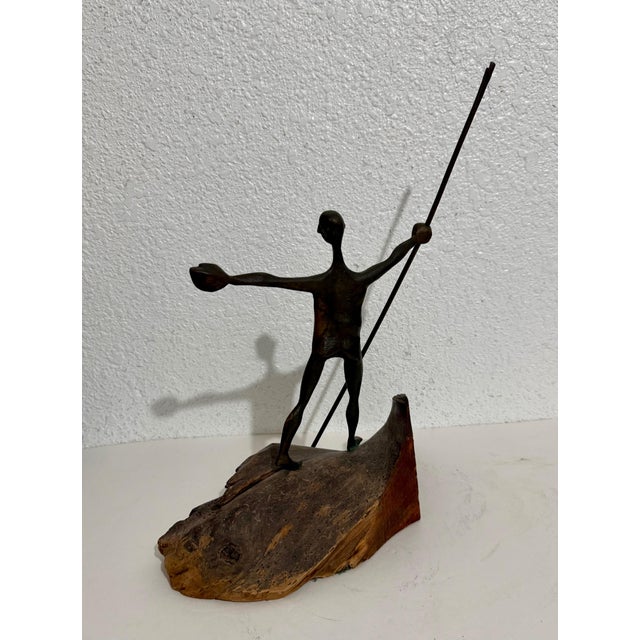
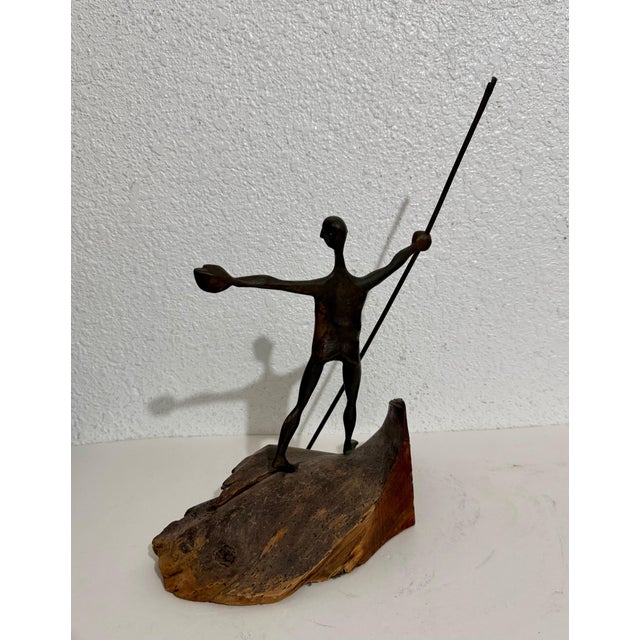
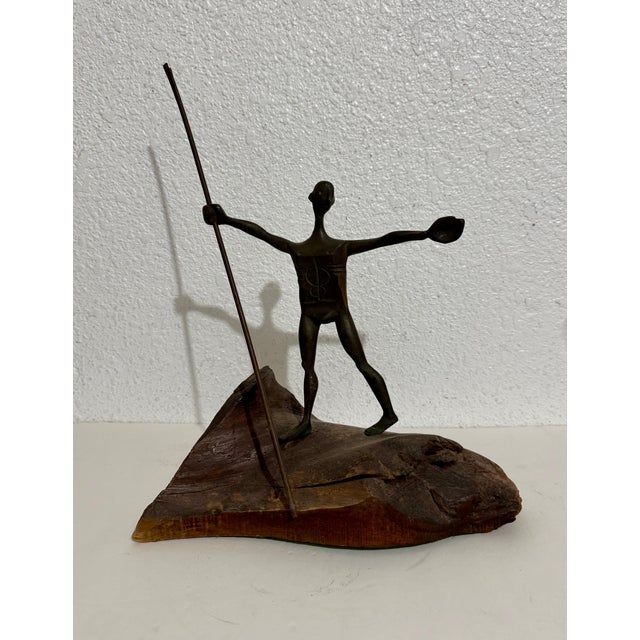
Bronze and wood sculpture. (Possibly the Old Man and The Sea)
It does not appear signed …
Read more
Milton Hebald (American, 1917-2015)
Bronze and wood sculpture. (Possibly the Old Man and The Sea)
It does not appear signed although there might be a signature on the bottom.
Milton Hebald (1917–2015)
American Figurative Sculptor Bronze Sculpture WPA Artist Prix de Rome Baroque Modernism New York School Whitney Museum Smithsonian
Milton Elting Hebald (May 24, 1917 – January 5, 2015) was one of the most important American figurative sculptors of the twentieth century — a monumental bronze sculptor, printmaker, and draughtsman whose career spanned nearly nine decades and whose work is installed in public places across New York City, Los Angeles, Europe, and beyond. The creator of the beloved Romeo and Juliet and The Tempest bronzes in Central Park, the Zodiac Screen at JFK Airport, and the headstone of James Joyce in Zurich, Hebald was a Prix de Rome laureate, a WPA artist, a Whitney Museum Annual exhibitor, and a sculptor described by biographer Frank Getlein as producing “an intensely humanizing body of work, each piece filled with an energy and vision unmoved by artistic fads or the critic’s opinion.”
Early Life and Education
Born in New York City on May 24, 1917, to a Polish immigrant father and an American-born mother, Hebald grew up in the Bowery neighborhood of lower Manhattan. After his father — a jewelry store owner — was killed in a robbery when Hebald was just six years old, the family struggled, and Hebald found his calling in art at an extraordinarily young age. He has said he cannot remember a time when he did not already know he was an artist. He left high school mid-senior year to pursue his vocation full time, studying at the Art Students League of New York, the National Academy of Design, and the Beaux-Arts Institute — the finest art training institutions in New York — building a rigorous foundation in anatomy, classical figurative tradition, and the full range of sculptural technique.
The WPA and Early Recognition
In the mid-1930s, Hebald joined the WPA Federal Art Project — the same monumental government arts program that shaped the careers of Jackson Pollock, Mark Rothko, Lee Krasner, Willem de Kooning, Louise Nevelson, and Ben Shahn — teaching and producing public art during one of the most fertile periods of American art history. In 1937, he exhibited at the ACA Gallery in New York, winning the Artist Congress Award — his first major prize. He exhibited again at the ACA Gallery in 1940, and participated in the 1940 Sculptors’ Guild show at the New York World’s Fair, where his wood sculpture Three Girls was praised by New York Times critic Edward Alden Jewell as “robustly alive.” He was part of a circle of artists that included Abraham Rattner, Arbit Blatas, Doris Caesar, Gregorio Prestopino, Morris Broderson, Henry Botkin, Adolf Arthur Dehn, Bertram Hartman, Jose De Creeft, Arnold A Blanch, Waldo Peirce, Balcomb Greene, Reuben Nakian, Peter Blume, Bernard Gussow, Byron Browne, Jack Levine, Isabel (Wolff) Bishop and Chaim Gross.
Whitney Museum Annuals and the New York Art World
Throughout the 1940s and 1950s, Hebald exhibited regularly at the Whitney Museum Annual — the most prestigious recurring survey of American art of the era. His work was included in the landmark 1945 Contemporary American Art exhibition at the Whitney alongside Alexander Archipenko, Milton Avery, Saul Baizerman, Aaron Bohrod, David Burliuk, José de Creeft, Julio de Diego, George Grosz, Minna Harkavy, Nathaniel Kaz, Jack Levine, Abraham Walkowitz, Max Weber, Nat Werner, and William Zorach — placing him at the center of the American figurative and modernist tradition. He continued exhibiting in the Whitney Annuals through 1960, with work included in the 1954, 1956, 1957, and 1960 Annual Exhibitions of Contemporary American Sculpture.
The Prix de Rome and Life in Italy
In 1953 Hebald was awarded the Prix de Rome — the most prestigious prize available to an American artist — by the American Academy in Rome, with a fellowship from 1956 to 1958. In 1955 he moved to Bracciano, Italy, near Rome, where he would live and work for the next fifty years, becoming a beloved figure in the Roman art world. He exhibited at the Schneider Gallery in Rome (1957) and was included in the landmark American Artists in Italy exhibition at the Downtown Gallery in New York (1965), as well as the 18 Artists from Italy exhibition at the Mint Museum in Charlotte, North Carolina (1965).
In Zurich, Hebald received one of his most historically significant commissions: the family of James Joyce — who died in Zurich in 1941 — engaged him to create Joyce’s headstone and graveside sculpture at Fluntern Cemetery, a portrait of the great Irish novelist that remains one of the most visited literary monuments in Europe.
The Zodiac Screen: The World’s Largest Sculpture
In 1961, Pan American World Airways commissioned Hebald to create the Zodiac Screen for their terminal at John F. Kennedy International Airport (then Idlewild Airport) in New York — a monumental bronze frieze measuring 220 feet in length, which at the time of its installation was the largest sculpture in the world. This commission alone places Hebald among the most ambitious American public sculptors of the twentieth century, in the tradition of Gutzon Borglum, Augustus Saint-Gaudens, and Daniel Chester French.
Central Park and New York’s Public Sculpture Legacy
Twenty-three of Hebald’s works are displayed publicly in New York City — a concentration of public sculpture rivaled by very few American artists. His most beloved New York works include Romeo and Juliet (1978) and The Tempest (1966), the two companion bronze groups installed in front of the Delacorte Theater in Central Park — gifts to the city that have become among the most photographed sculptures in Manhattan. Additional New York commissions include a bust of opera tenor Richard Tucker near Lincoln Center, a portrait of folk singer Huddie “Lead Belly” Ledbetter, and numerous other public works. His Olympiade ‘84 bronze group was commissioned for the Stuart Ketchum YMCA in Los Angeles in tribute to the 1984 Olympic Games, and additional public works are installed at the United Nations Plaza and in The Hague, Netherlands.
Artistic Style: Baroque Modernism and the Figurative Tradition
Hebald’s style has been described as “contemporary Baroque” — a synthesis of the dynamic movement, emotional intensity, and theatrical power of the Baroque sculptural tradition, particularly Gian Lorenzo Bernini, with the modernist figurative sensibility of twentieth century American sculpture. His work in bronze, terracotta, wood, and plaster is characterized by strong diagonal lines, fluid movement, and a deep commitment to the human figure as the primary vehicle for artistic and humanistic expression. As critic and biographer Frank Getlein wrote, Hebald’s oeuvre is “an intensely humanizing body of work.” His Baroque theatricality distinguishes him from the cooler figurative tradition of artists like Gaston Lachaise and Paul Manship, while his rootedness in the human form sets him apart from the abstract sculptors of his generation.
Gallery Representation and Exhibition History
Hebald’s gallery career spans eight decades and three continents. His New York exhibitions include the ACA Gallery (1937, 1940); Grand Central Moderns (1954); Nordness Gallery (1959, 1960, 1963); the Downtown Gallery (1965); and Randall Gallery (1978). In Washington, D.C., he showed at the Mickelson Gallery (1963, 1967). On the West Coast, his venues included the Penthouse Gallery, San Francisco (1964); Zora Gallery, Los Angeles (1965); and Kolver Gallery, Chicago (1966). His long and distinguished association with Harmon-Meek Gallery in Naples, Florida — one of the most respected galleries of American art in the Southeast — began in 1969 and continued through retrospectives (1983), group shows, and solo exhibitions across four decades. He also showed at Foster Harmon Gallery of American Art in Sarasota, Florida (1980), and Pushkin Gallery in Santa Fe, New Mexico.
Museum Collections and Public Installations
Milton Hebald’s work is held in the permanent collections of the Whitney Museum of American Art, New York; (His work was included in the Whitney 1945 Contemporary American Art exhibition along with Alexander Archipenko, Milton Avery, Saul Baizerman, Aaron Bohrod, David Burliuk, José de Creeft, Julio de Diego, George Grosz, Minna Harkavy, Milton Hebald, Nathaniel Kaz, Jack Levine, Abraham Walkowitz, Max Weber, Nat Werner and William Zorach) the Smithsonian American Art Museum, Washington, D.C.; and the National Gallery of Art, Washington, D.C. His public installations include Central Park (New York), Lincoln Center (New York), John F. Kennedy International Airport (New York), United Nations Plaza (New York), Fluntern Cemetery (Zurich, Switzerland), The Hague (Netherlands), the Stuart Ketchum YMCA (Los Angeles), and numerous other public and private sites across the United States and Europe — more than 62 public installations worldwide.
Legacy
Milton Hebald died on January 5, 2015, in West Hollywood, California, at the age of 97, having sculpted and drawn actively until the end of his life. He is regarded as one of the most important American figurative sculptors of the twentieth century — a WPA artist who bridged the era of the New Deal and the era of postwar American art, a Prix de Rome laureate who brought the grand tradition of European monumental sculpture to the streets of New York, and a humanist whose work celebrates the beauty, dignity, and complexity of the human form. His bronzes, terracottas, and works on paper appear regularly at auction and are actively collected by institutions and private collectors worldwide.
Keywords: Milton Hebald, Milton Hebald sculpture, Milton Hebald bronze, Milton Hebald terracotta, American figurative sculptor, WPA artist, Prix de Rome, Baroque modernism, Central Park sculpture, Delacorte Theater, Romeo and Juliet sculpture, James Joyce headstone Zurich, Zodiac Screen JFK Airport, Whitney Museum Annual, Smithsonian collection, Harmon-Meek Gallery, Grand Central Moderns, Nordness Gallery, ACA Gallery, American Academy in Rome, figurative bronze sculpture for sale, 20th century American sculpture, New York public sculpture, monumental bronze sculpture.
See less
- Dimensions
- 35.56ʺW × 7ʺD × 18ʺH
- Art Subjects
- Figure
- Period
- 1960s
- Country of Origin
- United States
- Item Type
- Vintage, Antique or Pre-owned
- Materials
- Bronze
- Wood
- Condition
- Good Condition, Original Condition Unaltered, Some Imperfections
- Color
- Bronze
- Condition Notes
- Good please see photos, minor wear commensurate with age. Good please see photos, minor wear commensurate with age. less
Questions about the item?
Returns & Cancellations
Return Policy - All sales are final 48 hours after delivery, unless otherwise specified in the description of the product.
Cancellation Policy - Prior to shipping or local pickup, buyers may cancel an order for up to 48 hours, unless otherwise specified.
Related Collections
- Straw Sculpture
- Fernando Botero Sculpture
- Constantin Brancusi Sculpture
- Louis XIV Sculpture
- Roman Bronze Works Sculpture
- Gourd Sculpture
- Recycled/Repurposed Sculpture
- Barovier and Toso Sculpture
- Far Pavilions Sculpture
- Maison Jansen Sculpture
- Flavio Poli Sculpture
- Georgian Sculpture
- Antique Iron Finish Sculpture
- Worlds Away Sculpture
- Photography Sculpture
- Jute Sculpture
- Blenko Sculpture
- Satinwood Sculpture
- Bakelite Sculpture
- Medium-Density Fibreboard Sculpture
- Geode Sculpture
- René Lalique Sculpture
- Gold-Plate Sculpture
- Sculpture in Panama City, FL
- Emmanuel Villanis Sculpture