

Details
Description
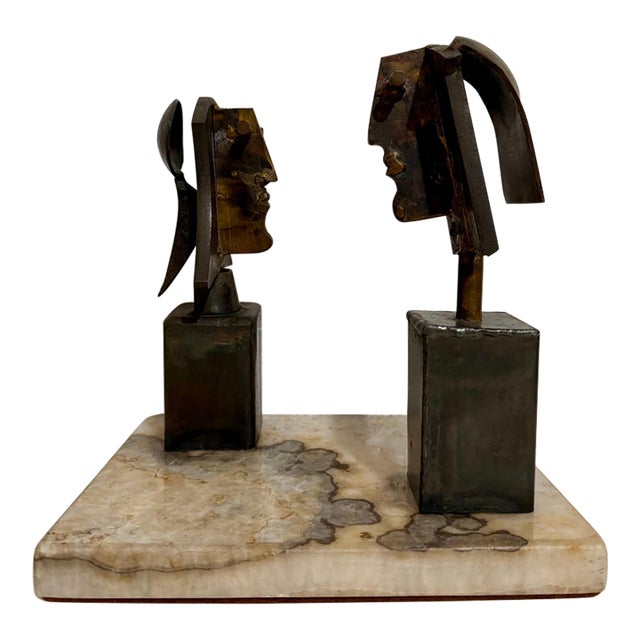
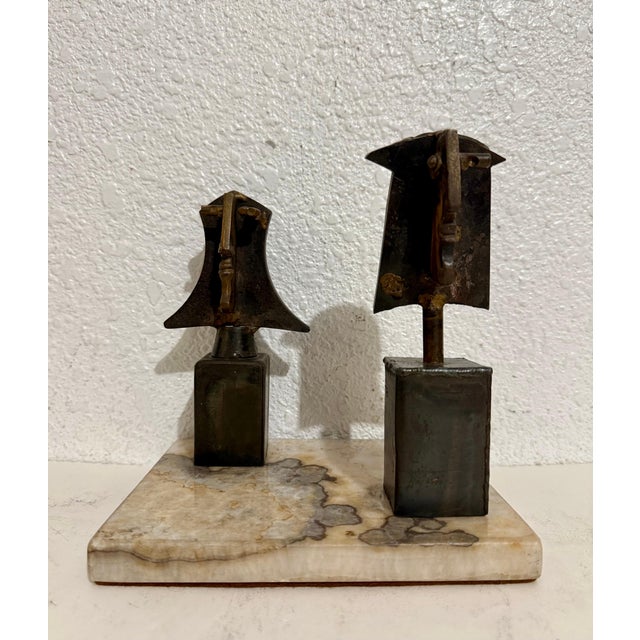
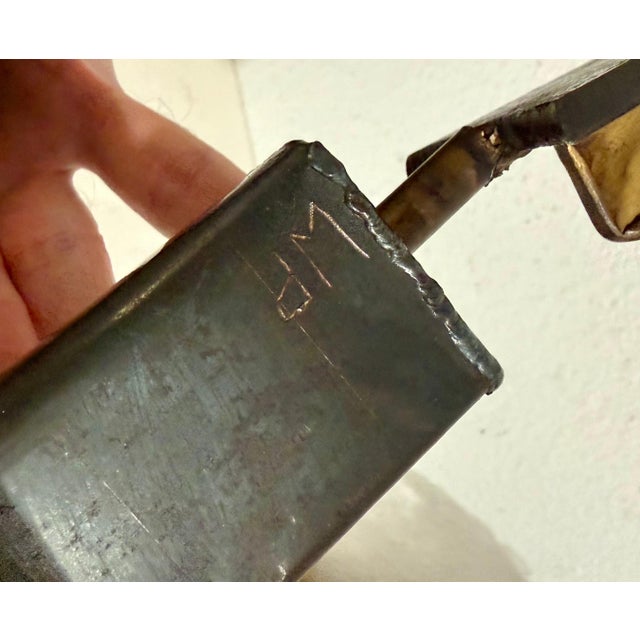
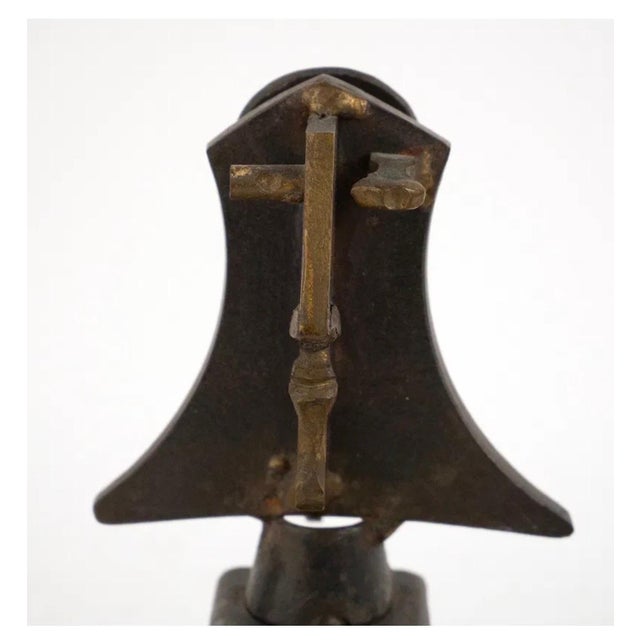
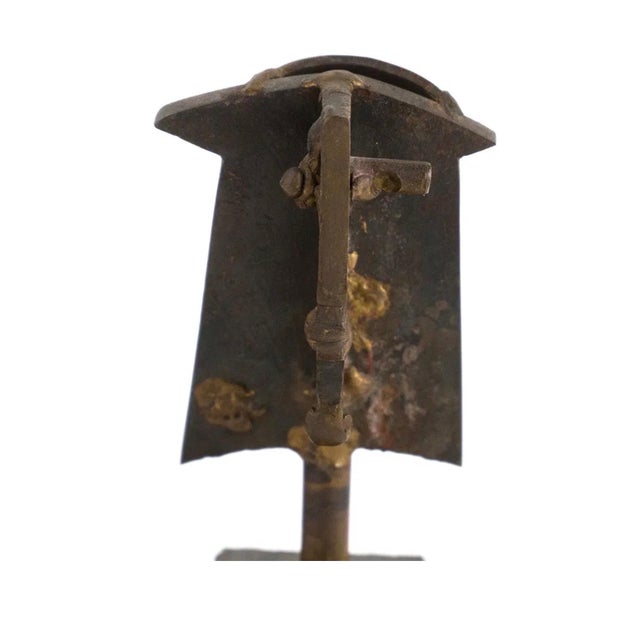
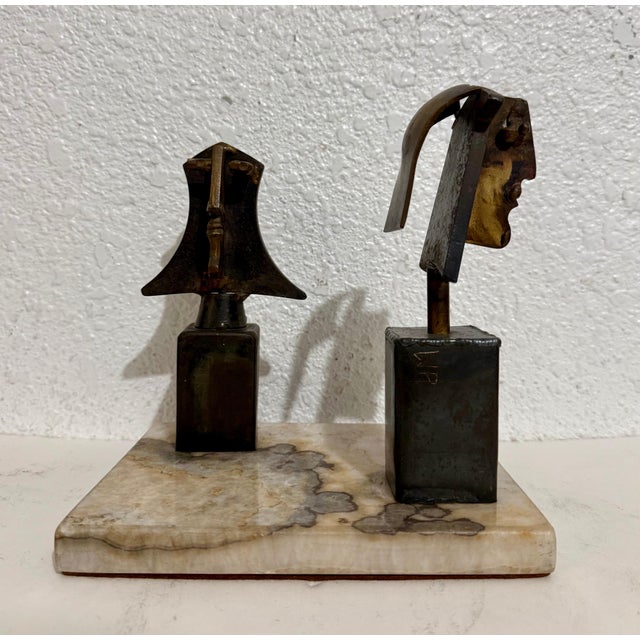
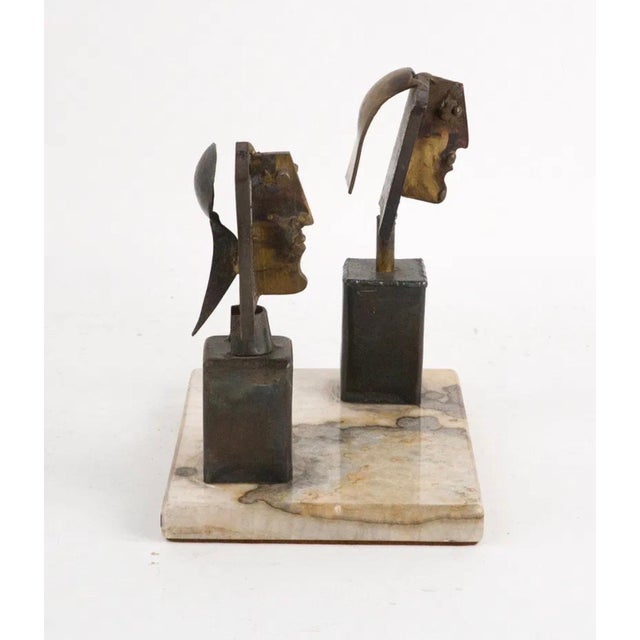
Hand signed dM with his initials.
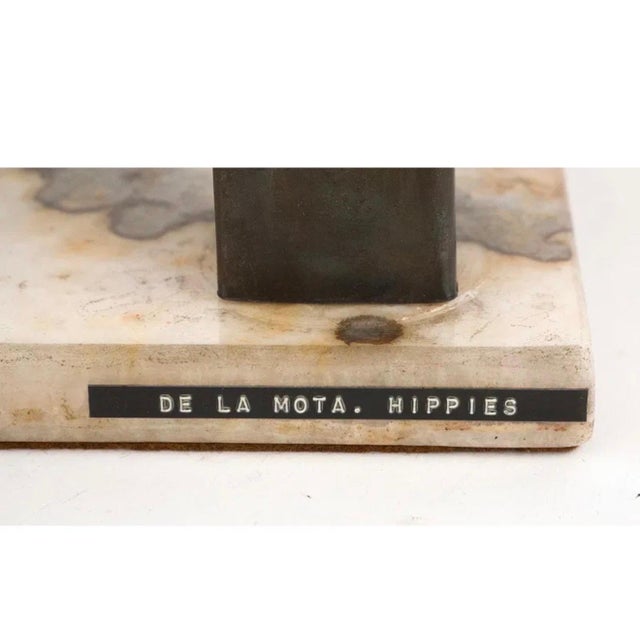
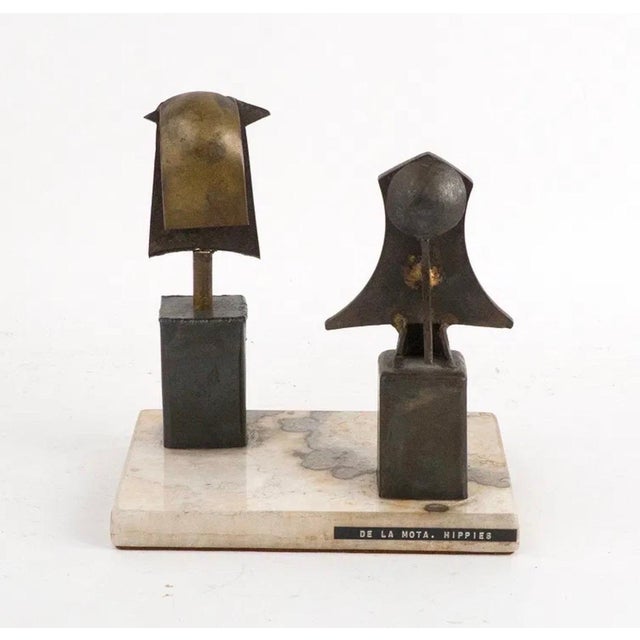
Bears a label with his name and a title "Hippies".
The pieces can be …
Read more
Hand signed dM with his initials.
Bears a label with his name and a title "Hippies".
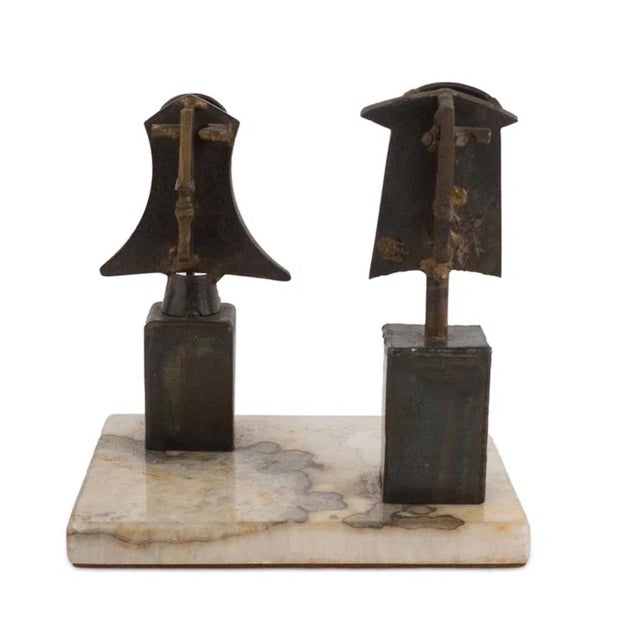
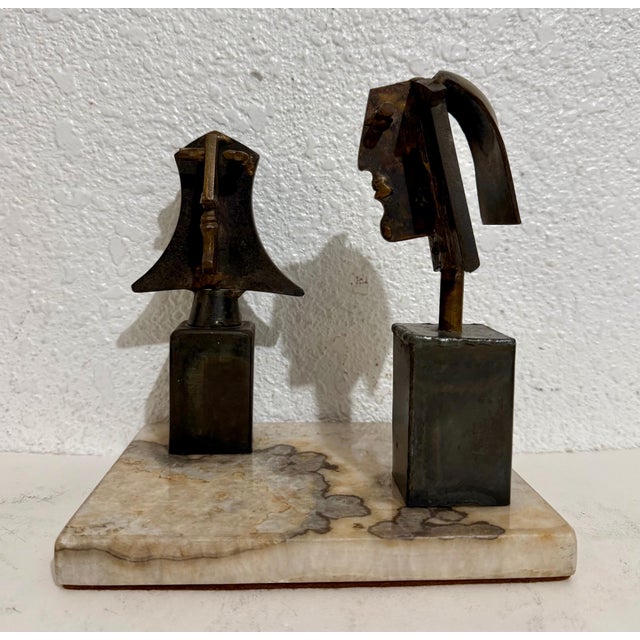
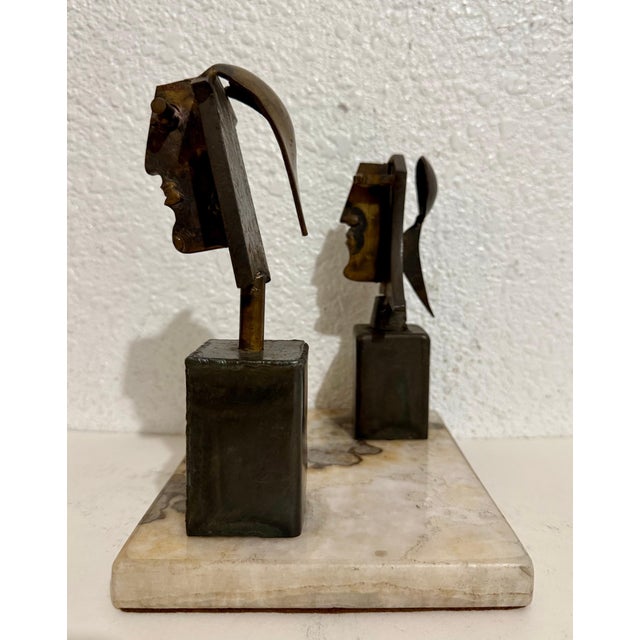
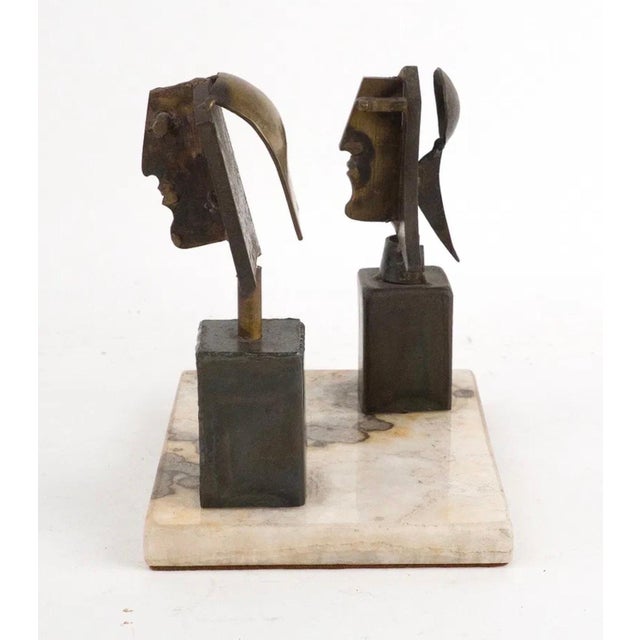
The pieces can be rearranged in various configurations.
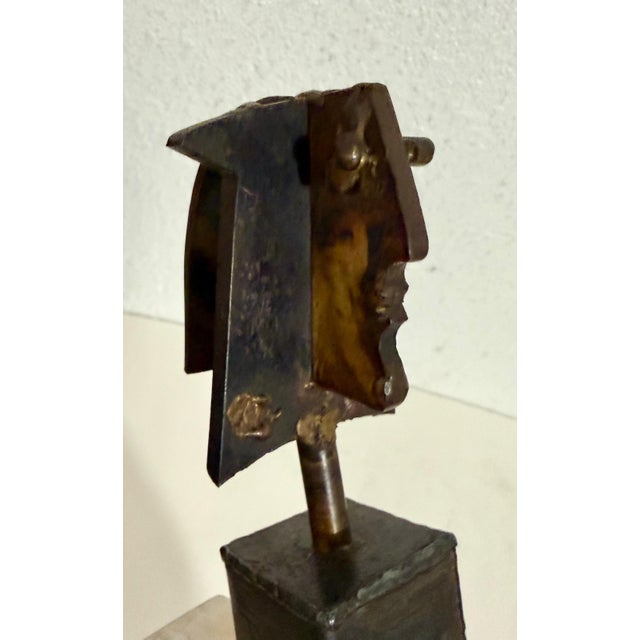
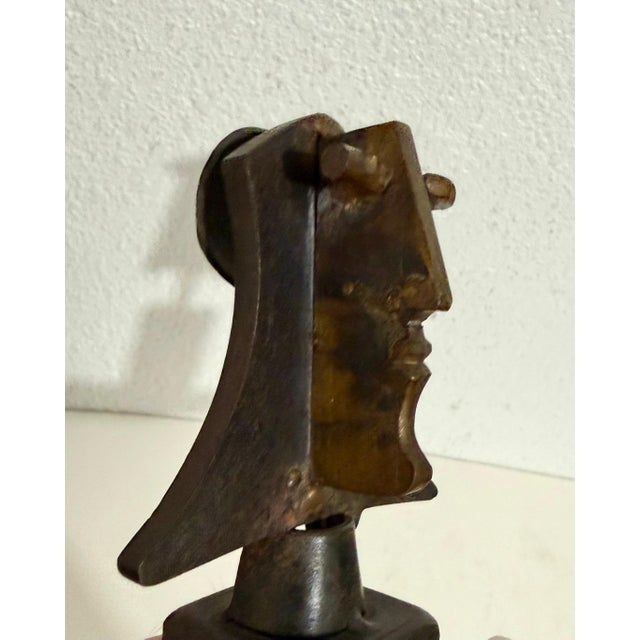
I believe this is wrought iron. It might be bronze.
Carlos de la Mota (1924–2011)
Argentine Sculptor Painter Printmaker Figurative Sculpture Argentine Modernism Premio Konex IV Bienal de São Paulo Academia Nacional de Bellas Artes
Juan Carlos de la Mota (August 13, 1924 – February 12, 2011) was one of the most distinguished Argentine sculptors of the twentieth century — a figurative sculptor, painter, and printmaker whose career spanned six decades, whose work was shown at the IV Bienal de São Paulo in 1957, and who was recognized with the prestigious Premio Konex in 1982 for figurative sculpture — one of Argentina’s highest cultural honors. A member of the Academia Nacional de Bellas Artes and a faculty member at the Universidad Nacional de Cuyo and the Universidad Nacional de Tucumán, De la Mota was a central figure in Argentine modernist sculpture, working in marble, granite, stone, wood, and metal to produce a body of work rooted in the figurative tradition while engaging with the broader currents of twentieth century Latin American art.
Early Life and Education
Born on August 13, 1924, in the Province of San Juan, Argentina, De la Mota showed an artistic vocation from an extraordinarily early age. At just eleven years old he began attending the studio of Anita Volspranky, and later continued his studies at the Politécnico de San Juan. In 1943 he enrolled at the Escuela de Bellas Artes of the Universidad Nacional de Cuyo in Mendoza — one of Argentina’s most prestigious fine arts institutions — where he studied under Ramón Gómez Cornet, one of the great masters of Argentine figurative art and a painter whose work engaged deeply with the indigenous peoples and landscapes of northern Argentina. From Gómez Cornet, De la Mota absorbed a commitment to the figurative tradition rooted in the specific realities of Argentine culture and history. He received the Premio Universitario from the Universidad Nacional de Cuyo in 1946.
Lino Enea Spilimbergo, Lorenzo Domínguez, and the Tucumán Years
In 1948, De la Mota participated in the landmark project organized at the Universidad Nacional de Tucumán by Lino Enea Spilimbergo — one of the greatest Argentine painters of the twentieth century and a towering figure in Latin American modernism, who had worked alongside Diego Rivera on Mexican murals and whose influence on Argentine figurative art was immense. De la Mota’s direct association with Spilimbergo placed him at the center of the most vital intellectual and artistic milieu in mid-century Argentina. He remained at the Universidad Nacional de Tucumán from 1949 to 1952 as assistant to Lorenzo Domínguez — one of the most respected Argentine sculptors of the era — in the sculpture faculty, building a teaching career alongside his studio practice that would continue for decades.
The Salón Nacional and the Argentine Art World
Throughout his career, De la Mota exhibited regularly at the major Argentine national and provincial salons — the Salón Nacional de Buenos Aires, the Salón de Cuyo, the Salón Nacional de Santa Fe, the Salón Municipal de Buenos Aires, and the Fundación Lorenzutti — the annual survey exhibitions where every significant Argentine sculptor and painter exhibited simultaneously. Through these shows he was a consistent presence alongside the leading figures of Argentine modernism of his generation, including Carlos Alonso — the celebrated Argentine figurative painter and printmaker — as well as Juan Grela, Orlando Pierri, Carlos Gorriarena, and Eleodoro Marenco. His solo and group exhibitions at Galería Rubbers, Galería Palatina, and the Centro Cultural Recoleta in Buenos Aires placed him within the mainstream of the Buenos Aires gallery world across four decades.
The IV Bienal de São Paulo and International Recognition
In 1957, De la Mota was selected to represent Argentina at the IV Bienal de São Paulo — one of the most important international art events in the Western Hemisphere, and the Latin American equivalent of the Venice Biennale in terms of prestige. His selection placed him alongside the leading figures of Argentine and international art in an exhibition that brought together the most significant painting, sculpture, and printmaking being produced across the Latin America and Europe.
European Residency and Artistic Development
In 1966, De la Mota was awarded the Beca del Fondo Nacional de las Artes — the National Arts Fund Fellowship — to travel to Europe for artistic research. He resided for a period in London, immersing himself in the museums and collections of Europe and deepening his engagement with the history of sculpture from ancient Egypt and Greece through the Renaissance and Baroque periods. His early passion for Egyptian and Greek sculpture — its monumentality, its formal clarity, its engagement with the human figure — had been a defining influence from his student years, and his European sojourn gave him direct access to the greatest works of the Western sculptural tradition.
Artistic Style: Figurative Sculpture in Marble, Granite, Wood, and Metal
De la Mota worked primarily as a sculptor in marble, granite, stone, wood, and metal — materials he chose for their physical presence, their resistance, and their connection to the deepest traditions of the sculptor’s craft. His figurative works engage the human form with a directness and solidity rooted in the classical tradition, while his paintings and prints demonstrate an artist equally at home in two dimensions, exploring portraiture, figure study, and the rich cultural landscape of Argentine life. Works appearing at auction include La Cantante Calva (The Bald Soprano), Rostro (Face), Wenceslao, Homenaje a Van Gogh (Homage to Van Gogh), Independencia de un Solitario (Independence of a Solitary One), La Pareja (The Couple), and Antiguo Torso de Mármol Esculpido (Ancient Carved Marble Torso) — titles that suggest a painter and sculptor equally engaged with portraiture, allegory, and the tragicomic dimensions of human experience.
His public commissions include work as assistant on the construction of the monument to José de San Martín and Bernardo O’Higgins in Mendoza — one of the most significant public sculptures in Argentina, honoring the two great liberators of South America.
Gallery and Exhibition History
De la Mota’s solo and group exhibition career spans the most prestigious venues in Argentine cultural life: the Salón Internacional de Arte at the Museo de Arte Moderno, Buenos Aires (1960); Galería Rubbers, Buenos Aires (1967) — one of the most respected galleries for Argentine modernism; the Salón de Escultura Argentina at the Fundación Lorenzutti, Buenos Aires (1975); Galería Palatina, Buenos Aires (1977, 1981, 1997); a major retrospective at the Centro Cultural Recoleta, Buenos Aires (1988); the Museo Municipal de Bellas Artes, La Plata (1990); Galería Centoira, Buenos Aires (2004); and the Fundación Alón para las Artes, Buenos Aires (2005).
Awards and Honors
De la Mota’s career was distinguished by an exceptional series of national prizes: Premio Universitario, Universidad Nacional de Cuyo (1946); Primer Premio de Escultura, Salón Municipal de Mendoza (1949); Tercer Premio, Salón de la Provincia de Tucumán (1952); Primer Premio, Salón Regional de la Provincia de San Juan (1954); Tercer Premio, Salón Nacional de la Provincia de Tucumán (1958); Premio Salón de Cuyo (1959); Primer Premio, Salón de la Provincia de Córdoba (1962); Premio Nacional de la Provincia de Santa Fe (1968); Premio de Grabado Antonio Berni for La Próxima Vedette (1968); Gran Premio de Honor, Salón Cinzano de Mendoza (1972); Premio Salón Nacional de Escultura (1972); Gran Premio de Honor, Salón Nacional de Santa Fe; Gran Premio de Honor, Salón Nacional de Escultura de Buenos Aires for El Abrigo de Pieles (1988); and Primer Premio, Salón Municipal de Artes Visuales, Museo Eduardo Sívori, Buenos Aires (1998). In 1982 he received the Premio Konex — Argentina’s most prestigious cultural prize — in the category of Figurative Sculpture.
Teaching and Academic Career
De la Mota was one of the most respected sculpture educators in Argentina. He served as assistant to Lorenzo Domínguez in the sculpture faculty at the Universidad Nacional de Tucumán (1949–1952); served as Director of Culture for the City of Mendoza (1958); in 1978 was appointed Profesor Titular (Full Professor) of Sculpture at the Facultad de Artes of the Universidad Nacional de Cuyo in Mendoza; and maintained a teaching studio in Buenos Aires throughout his later career. He was a member of the Academia Nacional de Bellas Artes — Argentina’s most distinguished art institution.
Legacy
Carlos de la Mota died in Buenos Aires on February 12, 2011, leaving behind a distinguished body of sculpture, painting, and printmaking that spans the full arc of Argentine modernism. A student of Gómez Cornet, a direct collaborator of Spilimbergo and Domínguez, a peer of Carlos Alonso and Juan Grela, an international exhibitor at the Bienal de São Paulo, a Premio Konex laureate, and a member of the Academia Nacional de Bellas Artes, De la Mota stands as one of the significant figures of twentieth century Argentine sculpture. His paintings, sculptures, and prints appear at auction at Artnet, Invaluable, and Latin American auction houses, and are collected by institutions and private collectors across Argentina, Latin America, and internationally.
Keywords: Carlos de la Mota, Juan Carlos de la Mota, Carlos de la Mota sculpture, Carlos de la Mota painting, Argentine sculptor, Argentine painter, Argentine modernism, Latin American art, Premio Konex, Academia Nacional de Bellas Artes Argentina, Bienal de São Paulo, Lino Enea Spilimbergo, Ramón Gómez Cornet, Lorenzo Domínguez, Carlos Alonso, Juan Grela, Orlando Pierri, Carlos Gorriarena, Galería Rubbers Buenos Aires, Galería Palatina Buenos Aires, Centro Cultural Recoleta, Universidad Nacional de Cuyo, Universidad Nacional de Tucumán, Fondo Nacional de las Artes, figurative sculpture Argentina, marble sculpture, bronze sculpture, Argentine art for sale, Latin American sculpture for sale, 20th century Argentine art.
See less
- Dimensions
- 8ʺW × 1ʺD × 8ʺH
- Styles
- Modern
- Art Subjects
- Figure
- Period
- Mid 20th Century
- Country of Origin
- United States
- Item Type
- Vintage, Antique or Pre-owned
- Materials
- Iron
- Marble
- Condition
- Good Condition, Original Condition Unaltered, Some Imperfections
- Color
- Bronze
- Condition Notes
- Good minor wear. figures swivel, can probably be tightened if you would like. Good minor wear. figures swivel, can probably be tightened if you would like. less
Questions about the item?
Returns & Cancellations
Return Policy - All sales are final 48 hours after delivery, unless otherwise specified in the description of the product.
Cancellation Policy - Prior to shipping or local pickup, buyers may cancel an order for up to 48 hours, unless otherwise specified.
Related Collections
- Straw Sculpture
- Fernando Botero Sculpture
- Constantin Brancusi Sculpture
- Louis XIV Sculpture
- Roman Bronze Works Sculpture
- Recycled/Repurposed Sculpture
- Gourd Sculpture
- Flavio Poli Sculpture
- Maison Jansen Sculpture
- Georgian Sculpture
- Barovier and Toso Sculpture
- Far Pavilions Sculpture
- Antique Iron Finish Sculpture
- Worlds Away Sculpture
- Photography Sculpture
- Jute Sculpture
- Blenko Sculpture
- Satinwood Sculpture
- Bakelite Sculpture
- Medium-Density Fibreboard Sculpture
- Gold-Plate Sculpture
- Geode Sculpture
- René Lalique Sculpture
- Polished Brass Finish Sculpture
- Sculpture in Panama City, FL