





Details
Description
Measurements:
height: 17.5 cm; width: 10 cm; depth: 6.5 cm
item :
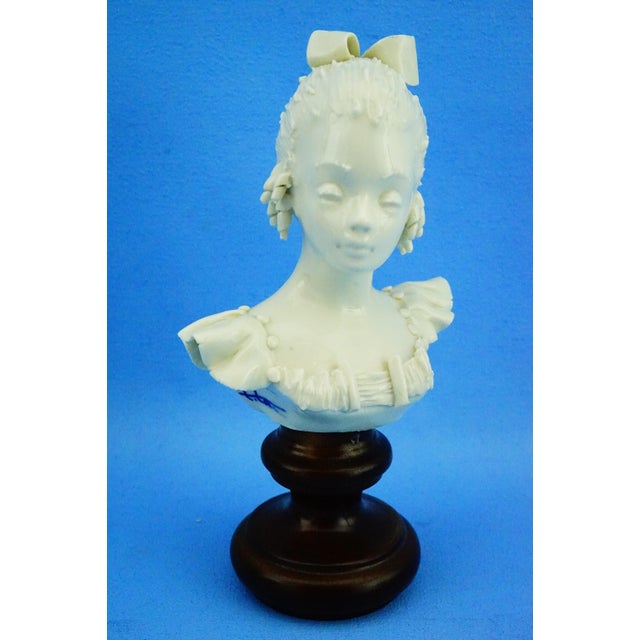
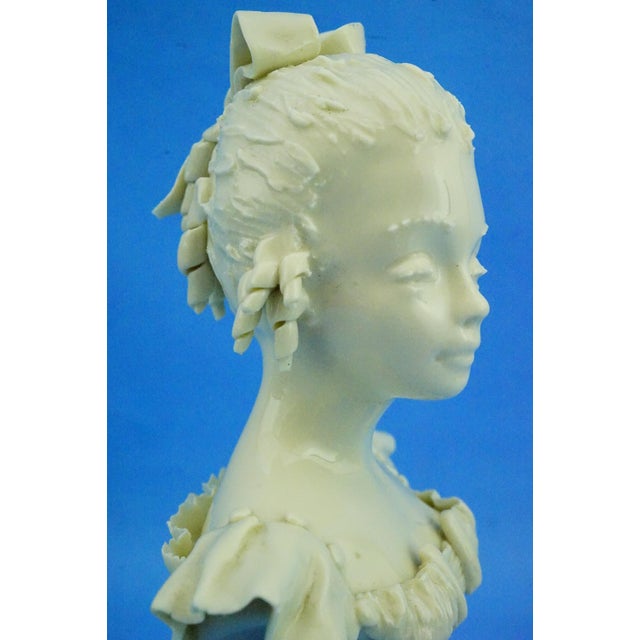
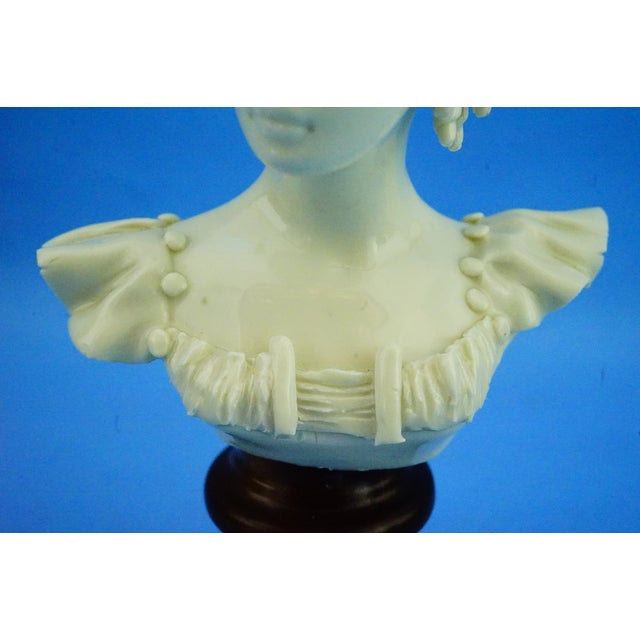
a stunning and extremely rare miniature bust depicting …
Read more
Measurements:
height: 17.5 cm; width: 10 cm; depth: 6.5 cm
item :
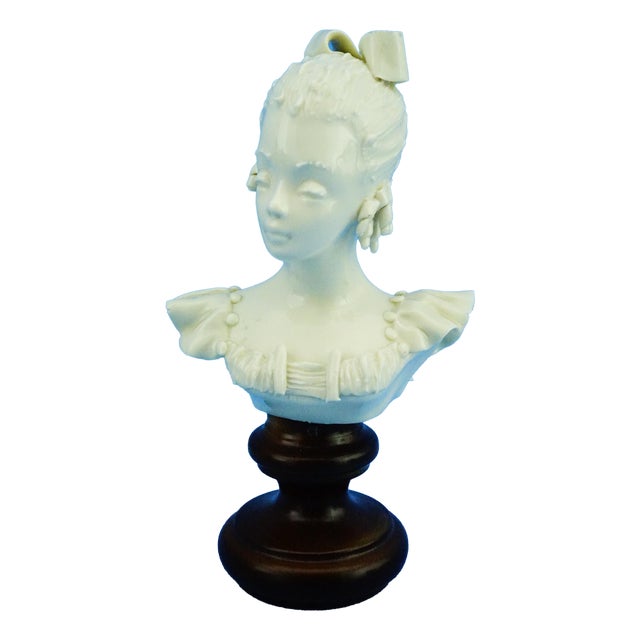
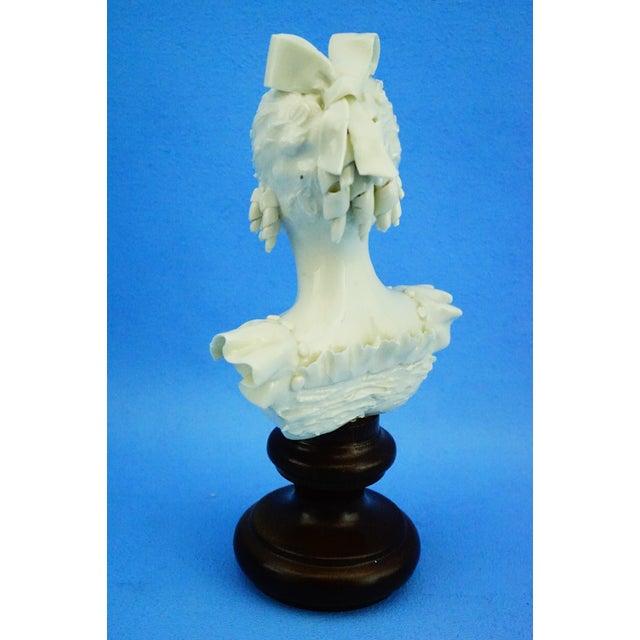
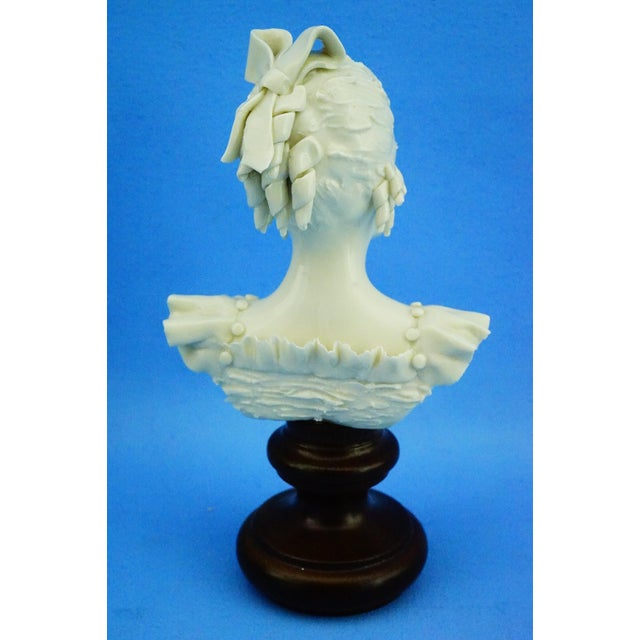
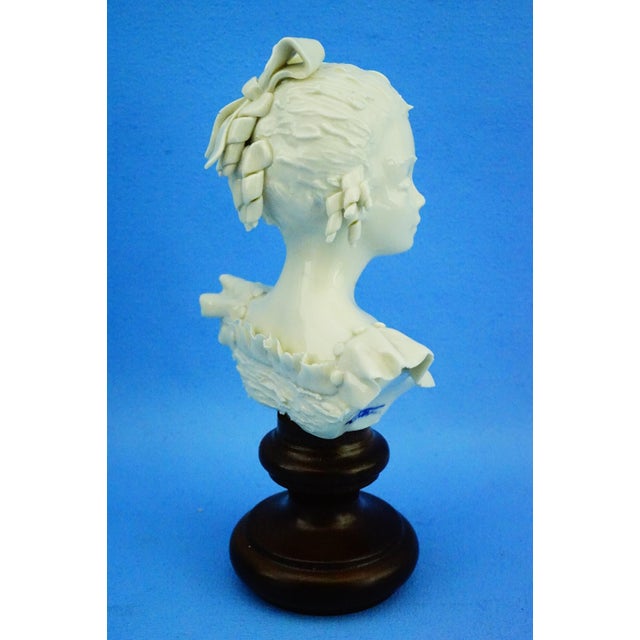
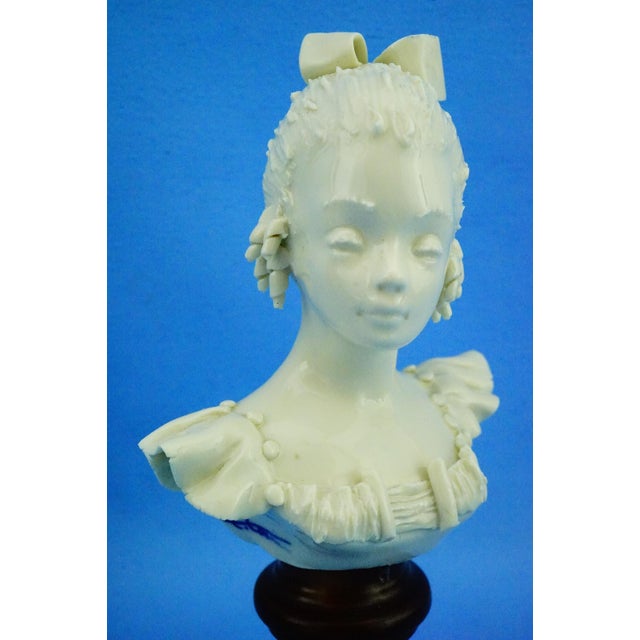
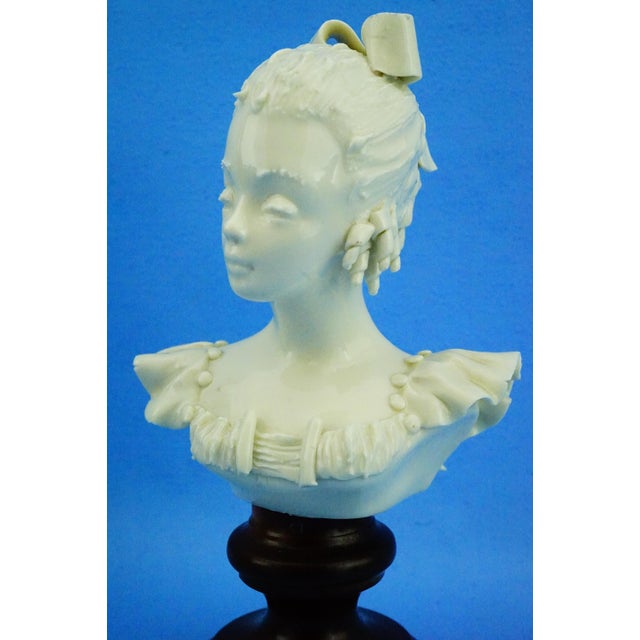
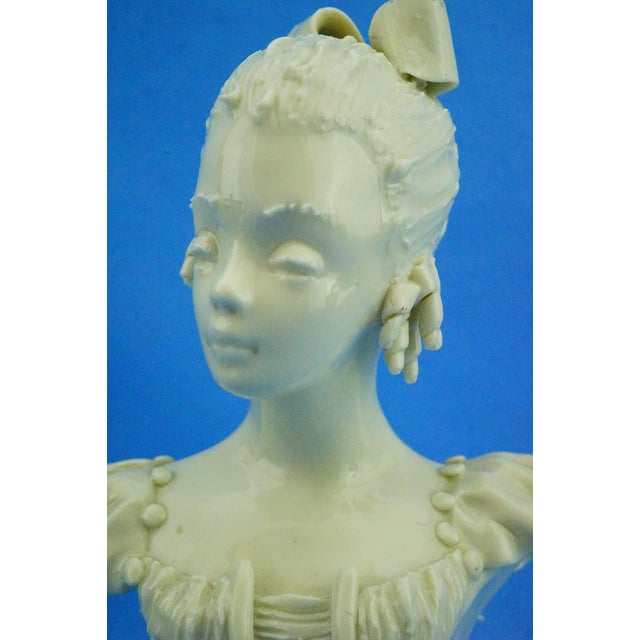
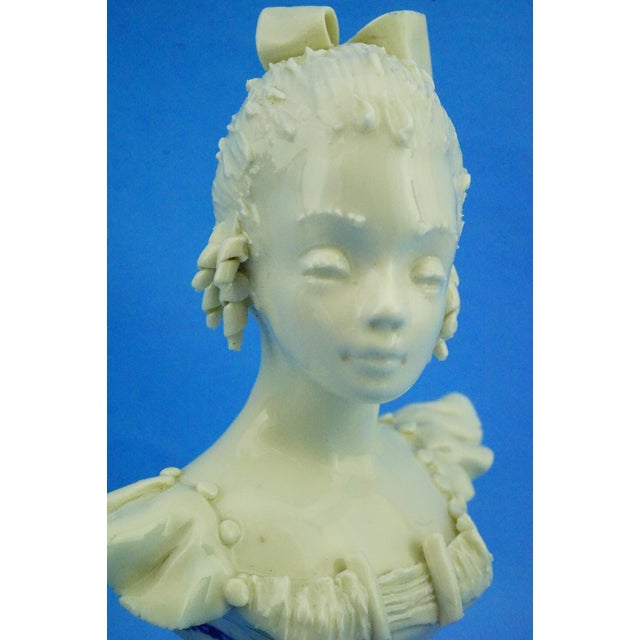
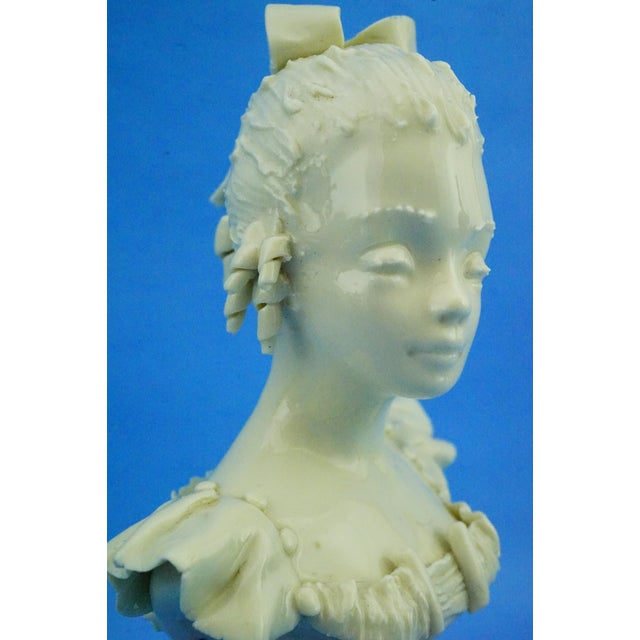
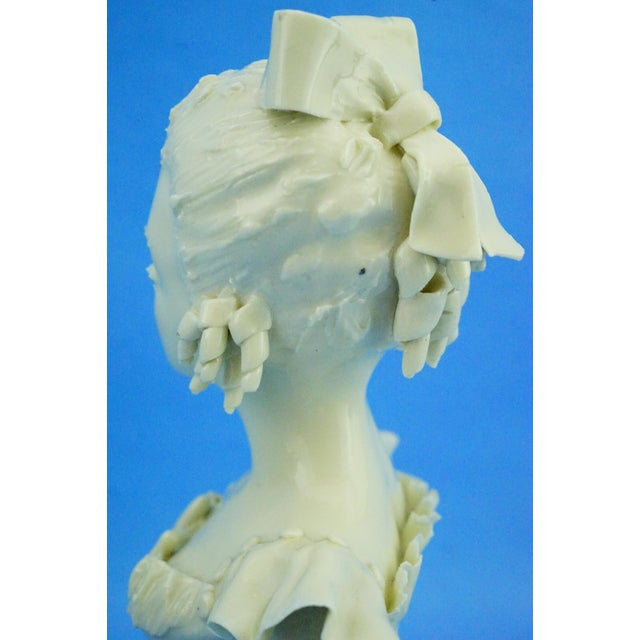
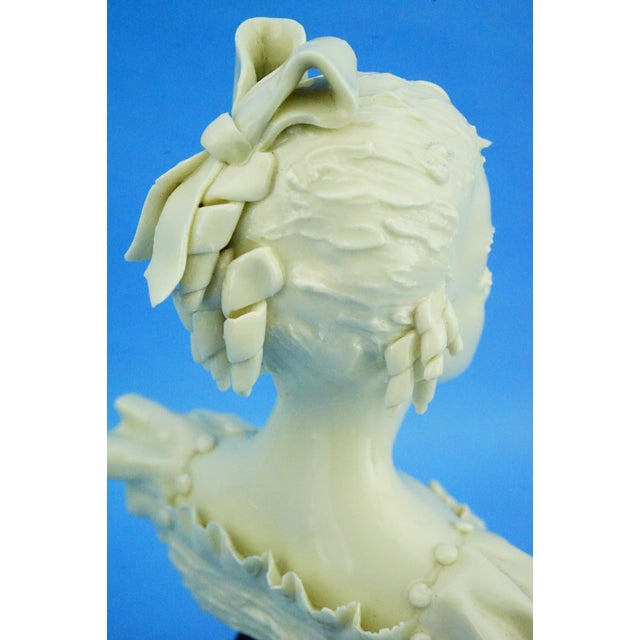
a stunning and extremely rare miniature bust depicting a young girl, a masterpiece entirely hand-sculpted and signed in blue by the artist tarcisio tosin. The work, measuring 17.5 cm high, 10 cm wide, and 6.5 cm deep, stands on an elegant circular turned wooden base. This base was replaced around 1960 and still bears the authentic metallic sticker of the period business "bomboniere lori" in terni, with the five-digit telephone number, an exceptional document certifying its provenance on the market in the late 20th century. The sculpture is immediately distinguished by the use of porcelain art (strong earthenware vitrified at very high temperatures), an unusual material for the artist, which gives the piece a milky whiteness, a silky sheen, and a partial translucency along the thinnest edges, for exquisite visual appeal. Many enthusiasts know that porcelain is usually worked in its liquid state in molds to create mass-produced objects, but porcelain can also be modeled by hand. However, it requires considerable experience because it is a less plastic material and more difficult to handle than other traditional clays; a technical characteristic that greatly enhances the artistic value of the piece. In fact, there is an elite technique, reserved for great sculptors, that allows porcelain to be modeled entirely by hand, starting from a solid, plastic block, purified with very little water. This material is known for being extremely sinewy, inelastic, and difficult to handle: it tends to collapse under its own weight and dries quickly, requiring a speed of execution and pinpoint sensitivity that only a master sculptor possesses. Tarcisio tosin overcame this technical challenge by modeling our bust from solid wood, hollowing out the interior to prevent cracks during firing, and then applying the individual curled details of the clothing and curled hair while still hot. Since no industrial or reproducible mold was used, every stroke of the stick and the artist's imprint remained imprinted in the material before vitrification at over 1300°c. This process makes the work a unique masterpiece and a truly one-of-a-kind piece, impossible to find identical on the market. The modeling reveals the master's extraordinary plastic sensitivity and executive virtuosity: the facial features are classically elegant and dreamy, characterized by softly closed eyes and delicately sculpted lips. The hairstyle is of exceptional beauty and technical complexity, with the hair gathered on top of the head in a large ribbon with a bow, embellished on the sides with a cascade of individually worked "spindle" curls and applied while still hot (pastillage technique). The drapery of the garments displays extraordinary mastery, punctuated by gathered collars, ruffles on the sleeves, and a row of small raised buttons distributed across the shoulders. The work bears the cobalt blue autograph signature "t. Tosin" under the glaze on the lower left edge of the bust, attesting to its direct authorship by the renowned sculptor tarcisio tosin and dating it to the late 1930s or early 1940s (circa 1935-1943). This bust represents a genuine and well-documented rarity in the oeuvre of this vicenza-born artist, universally renowned for his humorous and popular sculptures in polychrome majolica and terracotta. The use of undecorated, white porcelain or earthenware isolates the purity of the sculptural form and the clarity of the design, revealing the more cultured, academic, and intimate side of tosin's work. The signature's handwriting, combined with the stylistic element of the female face, inherited from late art nouveau and art deco styles, clearly differentiates this piece from subsequent serial or commercial productions by the "la freccia" factory, qualifying it as a work personally executed by the artist at the height of his technical maturity. Finally, the perfect state of preservation and the high quality of the material enhance the uniqueness of this highly collectible sculpture for art lovers.
useful information for evaluating this item:
the antiques market for tarcisio tosin's works enjoys an extremely loyal and constantly rising interest, particularly in pre-war historical pieces. At major 20th-century decorative art auctions (such as cambi, il ponte, or capitolium art), the celebrated polychrome majolica pieces from the "la freccia" factory regularly fetch prices between €400-600 and €1,200-2,500, depending on the sculpture's size, subject, complexity of decoration, and shape. Meanwhile, on leading international high-end and luxury antiques platforms, such as 1stdibs or pamono, ceramic sculptures, vases, or busts signed by tosin range in price from €500-800 to over €1,500-3,000, depending on their size, complexity of decoration, and the shape of the subject depicted. Although our bust is small in size, it should be noted that his cabinet pieces (i.e., his small ceramic sculptures and figurines intended for a sophisticated collector's clientele), executed in porcelain or white earthenware and hand-signed by the artist like our bust, constitute a distinct commercial niche due to their extremely limited availability on the market. The specific value of this small bust is strongly supported by the absolute rarity of the material used, the exceptional craftsmanship of the drapery and bow, and the structural integrity of the work. Given these factors, even considering the small size of our bust, a conservative market value for this specific piece is estimated between €600 and €900.
information on the artist and/or manufacturer:
tarcisio tosin (1904-1999) was one of the most multifaceted, innovative, and charismatic figures in 20th-century italian ceramic sculpture. Born in verona into a family with a long tradition of pottery, his father marco was the head painter at the renowned minardi factory in faenza. Tosin was exposed to the art of terracotta from an early age. His training was consolidated at the renowned school of arts and crafts in vicenza, where he learned the academic rigor of plastic sculpture. After honing his technique working as artistic director at major venetian kilns (including the zanolli, sebellin, and zarpellon factories in nove), in 1932 he took a pivotal step in his career by taking over the fratelli brotto factory in vicenza, to which he gave the successful "la freccia" brand. It was the beginning of an extraordinary artistic epic: tosin led venetian ceramics away from the old 19th-century mold, enthusiastically embracing the aesthetics of art deco and, later, the bold and dynamic influence of futurism. Major artistic achievements and institutional recognition crowned a long and fruitful career. Tosin exhibited regularly, receiving enormous critical acclaim, at the most prestigious national and international art venues, including the venice biennale (where his creations appeared in several editions starting in the 1930s), the milan triennale, and the prestigious international ceramics exhibition in faenza. The stylistic signature that made him famous throughout europe was his exceptional ability to blend irony and caricature with impeccable sculptural execution. His celebrated humorous subjects, folkloric characters, sports figures (such as famous cyclists and skiers), and elegant young women modeled in polychrome majolica became veritable cult objects for the upper middle class of the time. In addition to the vast and successful production of the "la freccia" factory, tosin always maintained a vibrant independent and niche artistic production, as evidenced by his rare forays into hand-signed porcelain and white earthenware, which showcased his purely sculptural and academic talent. Today, tarcisio tosin's historic works from the 1930s to the 1950s are considered milestones in twentieth-century decorative arts and are exhibited in important private collections and museums, including the civic museum of vicenza and the international museum of ceramics in faenza (mic). This piece has an attribution mark,
i am sure that it is completely authentic and take full responsibility for any authenticity
issues arising from misattribution
See less
- Dimensions
- 3.94ʺW × 2.36ʺD × 6.69ʺH
- Art Subjects
- Nude
- Period
- 1930s
- Country of Origin
- Italy
- Item Type
- Vintage, Antique or Pre-owned
- Materials
- Porcelain
- Condition
- Good Condition, Original Condition Unaltered, Some Imperfections
- Color
- White
Returns & Cancellations
Return Policy - All sales are final 48 hours after delivery, unless otherwise specified in the description of the product.
Cancellation Policy - Prior to shipping or local pickup, buyers may cancel an order for up to 48 hours, unless otherwise specified.
Related Collections
- Loredano Rosin Sculpture
- Fernando Botero Sculpture
- Louis XIV Sculpture
- Sculpture in Panama City, FL
- Bentwood Sculpture
- Worlds Away Sculpture
- Angela Chrusciaki Blehm Sculpture
- Barovier and Toso Sculpture
- Lime Sculpture
- Far Pavilions Sculpture
- Constantin Brancusi Sculpture
- Maison Jansen Sculpture
- Georgian Sculpture
- Bakelite Sculpture
- Witco Sculpture
- Gold-Plate Sculpture
- Recycled/Repurposed Sculpture
- Antique Iron Finish Sculpture
- Albert Ernest Carrier-Belleuse Sculpture
- Polished Brass Finish Sculpture
- Photography Sculpture
- Sculpture in Columbus
- Austin Productions Sculpture
- Mid-Century Modern Sculpture
- Alabaster Sculpture