

Details
Description
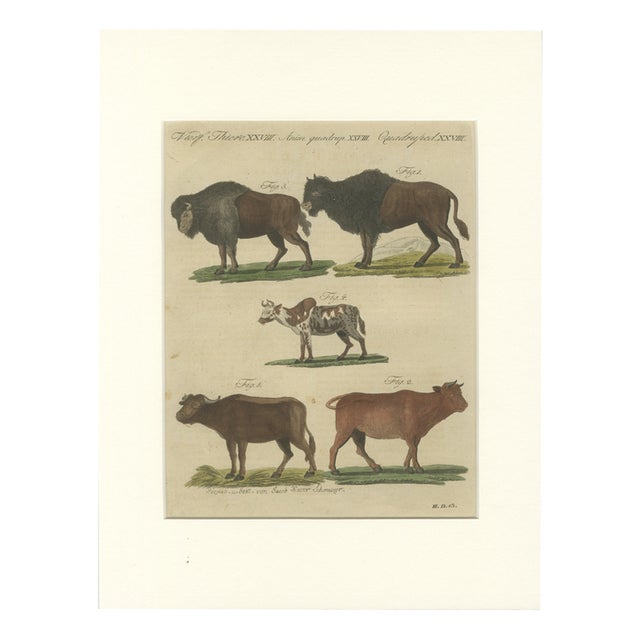
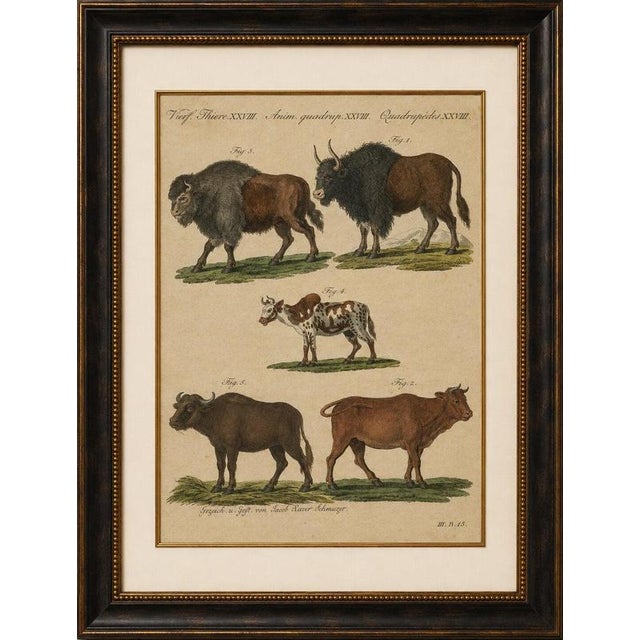
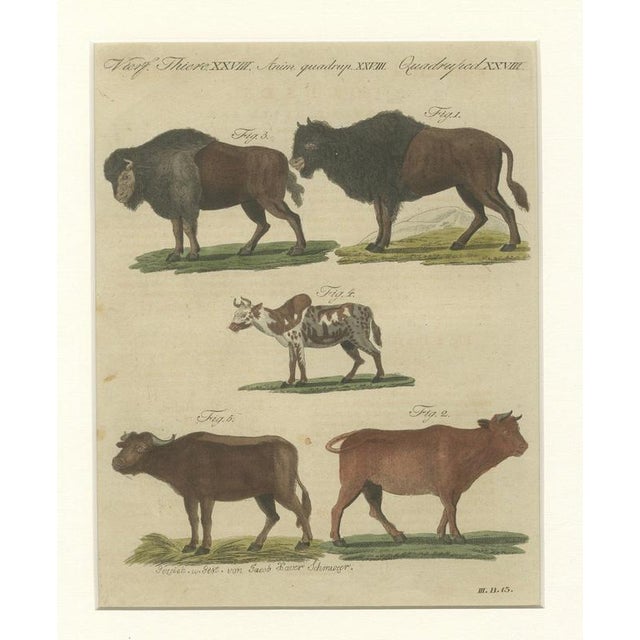
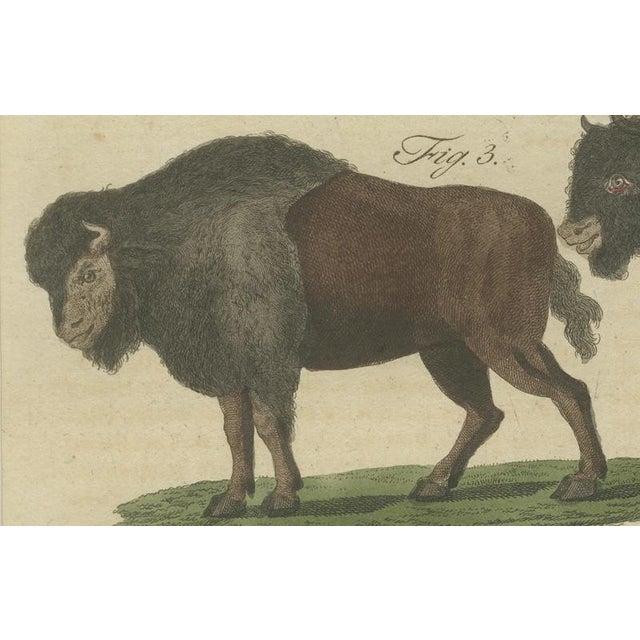
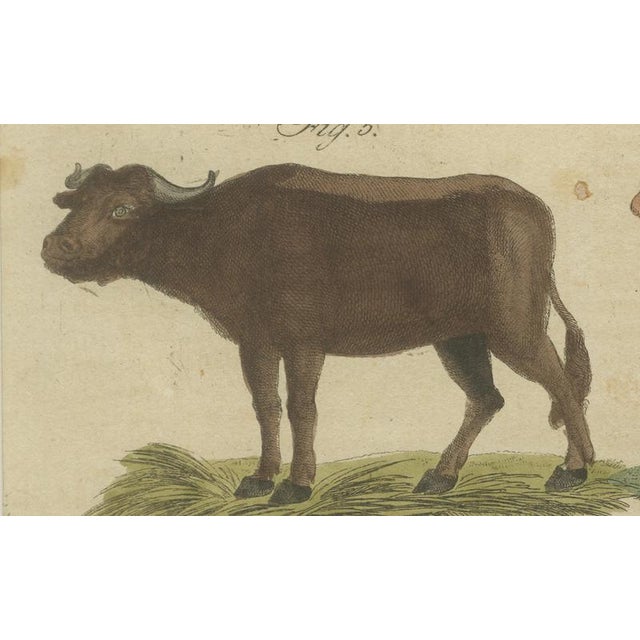
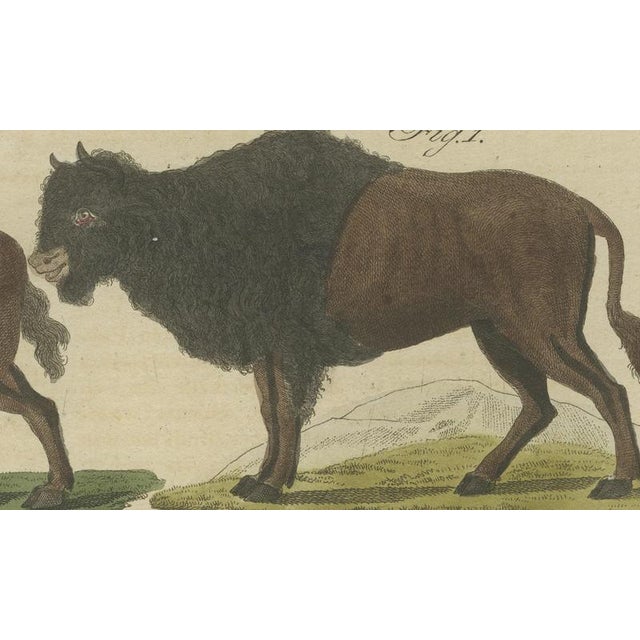
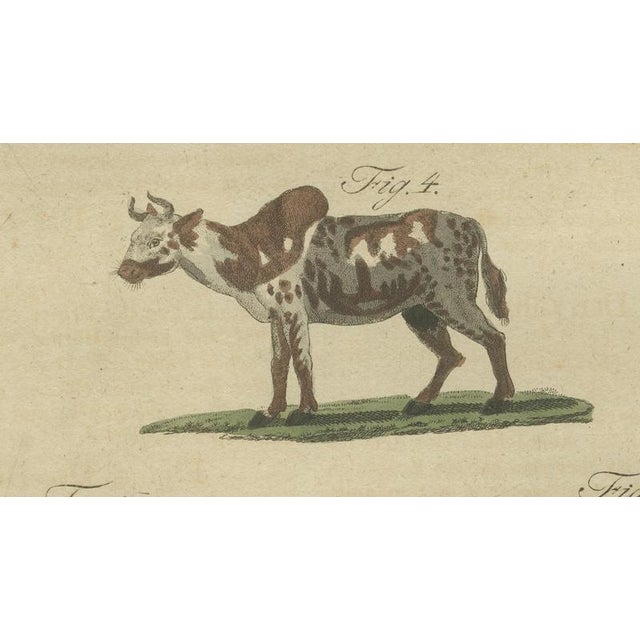
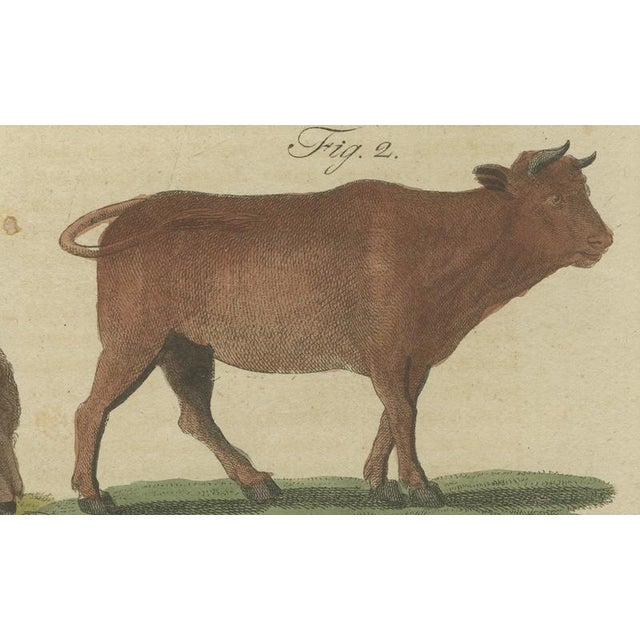
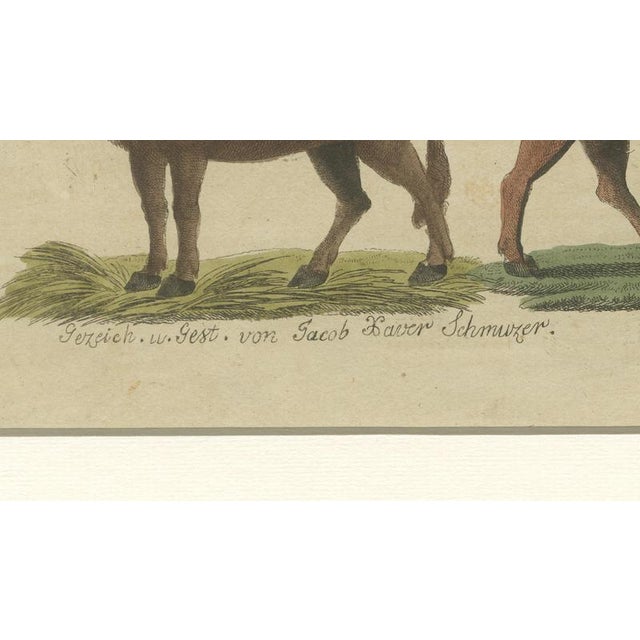
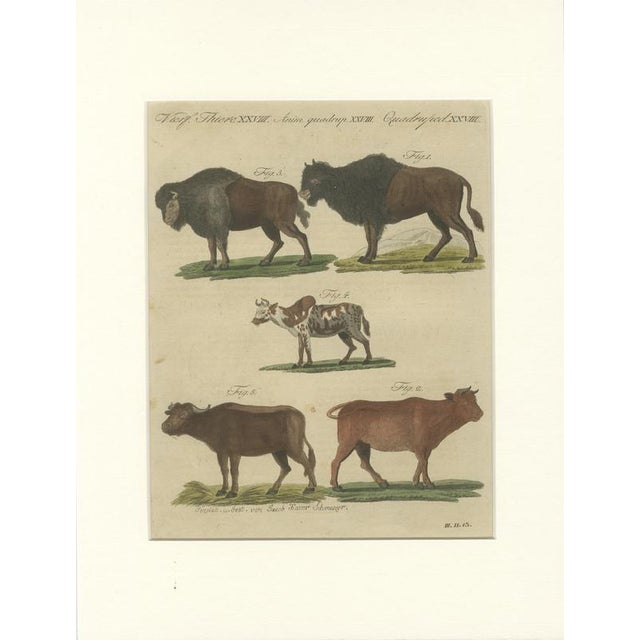
Title: antique yak, indian cattle, buffalo & musk ox engraving – bertuch, 1796 original antique hand-colored copper engraving depicting five … Read more Title: antique yak, indian cattle, buffalo & musk ox engraving – bertuch, 1796 original antique hand-colored copper engraving depicting five remarkable cattle and bovids from asia, africa and the northern regions, published in friedrich justin bertuch’s celebrated “bilderbuch für kinder” in weimar in 1796. The plate is headed “vierfüßige thiere xxviii / anim. Quadrup. Xxviii / quadrupèdes xxviii” and illustrates several exotic members and varieties of the ox and cattle family. Bertuch’s original subject identifies the animals represented on this plate as the sarluk or grunting ox, the indian cow, the african buffalo and the musk ox. Fig. 1 – sarluk / grunting ox / yak the large shaggy animal at upper right represents the sarluk, historically also known as the grunting ox. Today this animal is generally associated with the yak (bos grunniens), the famous long-haired bovine of the highlands of central asia and the himalayan region. Its heavy shaggy coat provides protection against extreme cold, while its powerful build makes the yak exceptionally well adapted to mountainous environments. The historical name “grunting ox” derives from the characteristic grunting sounds made by the animal. Fig. 2 – indian cow / indian cattle the reddish-brown animal at lower right represents an indian form of domestic cattle. Indian cattle were of considerable interest to european naturalists because their appearance differed noticeably from familiar european breeds. Their distinctive characteristics eventually became associated particularly with zebu-type cattle (bos indicus), although historical classifications and illustrations do not always correspond exactly with modern breeds. Fig. 3 – sarluk / yak the second shaggy animal at upper left represents another example or variety of the sarluk or grunting ox. Its massive forequarters, dark shaggy mane and shorter hindquarters give it a remarkably bison-like appearance, illustrating why early european naturalists sometimes struggled to distinguish and classify the various wild and domesticated bovids encountered through travel and exploration. Fig. 4 – indian cow the smaller centrally positioned animal represents another indian cattle variety, attractively depicted with a distinctive brown-and-white patterned coat. Fig. 5 – african buffalo the dark horned animal at lower left represents the african buffalo. Today the african or cape buffalo is classified as syncerus caffer. It is one of africa’s largest and most powerful bovids and is distinguished by its massive body and heavy horns. Musk ox bertuch’s original of this plate also includes the musk ox, historically grouped with ox-like animals because of its heavy build and exceptionally thick coat. The musk ox (ovibos moschatus) is native to the arctic regions of north america and greenland. Despite its traditional name and ox-like appearance, modern zoology places it closer to goats and sheep than to true cattle. The plate is particularly interesting as a record of late 18th-century zoological classification. European naturalists were attempting to understand relationships between domestic cattle, yaks, buffaloes, musk oxen and other bovids at a time when many exotic species were known principally through travellers’ s, preserved specimens and earlier natural-history illustrations. Friedrich justin bertuch (1747–1822) was a german publisher, writer and patron of the arts. His monumental “bilderbuch für kinder” (picture book for children), first published in weimar in 1790, became one of the great illustrated educational encyclopedias of the late 18th and early 19th centuries. Its hundreds of engraved and hand-colored plates introduced readers to animals, plants, geography, science, technology, antiquity and cultures from around the world. The plate is inscribed at the bottom: “gezeich. U. Gest. Von jacob xaver schmuzer” meaning “drawn and engraved by jacob xaver schmuzer.” the combination of shaggy exotic cattle, buffalo and unusual regional breeds makes this an especially decorative natural-history plate, well suited to a country-house, farmhouse, library, study or natural-history interior. Technique: original hand-colored copper engraving publisher: friedrich justin bertuch / industrie-comptoir publication: bilderbuch für kinder place: weimar, germany date: 1796 plate: vierfüßige thiere xxviii / anim. Quadrup. Xxviii / quadrupèdes xxviii artist / engraver: jacob xaver schmuzer subjects: sarluk or grunting ox, indian cattle, african buffalo and musk ox modern names associated with the historical subjects: yak / grunting ox – bos grunniens indian cattle / zebu – bos indicus african buffalo / cape buffalo – syncerus caffer musk ox – ovibos moschatus condition: good antique condition with overall age-related toning, scattered foxing and spotting and some visible show-through or offsetting from printed text. Minor marks and imperfections are present consistent with a print dating from 1796. The original hand coloring remains attractive, with restrained shades of brown, black, green and ochre. Please study the photographs carefully as they form part of the condition . The engraving is loosely inserted in an acid-free matting board. Please note: this is an original antique hand-colored copper engraving from 1796, not a modern reproduction. The print is sold unframed. Framed images or interior views, if shown, are for presentation and inspiration only. Other companion animal and natural-history plates from bertuch’s “bilderbuch für kinder” are also available separately. Keywords: friedrich justin bertuch, bilderbuch für kinder, yak, sarluk, grunting ox, bos grunniens, indian cow, indian cattle, zebu, bos indicus, african buffalo, cape buffalo, syncerus caffer, musk ox, ovibos moschatus, antique cattle print, antique buffalo print, antique yak print, ox engraving, bovine print, exotic cattle, livestock engraving, jacob xaver schmuzer, hand-colored copper engraving, antique zoology, natural history illustration, 18th century engraving, 1796, weimar, original antique print See less
- Dimensions
- 9.45ʺW × 11.81ʺH
- Period
- Early 19th Century
- Country of Origin
- Germany
- Item Type
- Vintage, Antique or Pre-owned
- Materials
- Paper
- Condition
- Good Condition, Unknown, Some Imperfections
- Color
- Black
- Condition Notes
- Very Good — This vintage item has no defects, but it may show slight traces of use\. Wear consistent with … moreVery Good — This vintage item has no defects, but it may show slight traces of use\. Wear consistent with age and use, Good antique condition with overall age-related toning, scattered foxing and spotting and some visible show-through or offsetting from printed text, Minor marks and imperfections are present consistent with a print dating less
Returns & Cancellations
Return Policy - All sales are final 48 hours after delivery, unless otherwise specified in the description of the product.
Cancellation Policy - Prior to shipping or local pickup, buyers may cancel an order for up to 48 hours, unless otherwise specified.
Related Collections
- Wenge Sculptural Wall Objects
- Helmut Friedrich Schäffenacker Sculptural Wall Objects
- Byzantine Sculptural Wall Objects
- Antique Copper Finish Sculptural Wall Objects
- Medium-Density Fibreboard Sculptural Wall Objects
- Asian Sculptural Wall Objects
- Mid-Century Modern Sculptural Wall Objects
- Curtis Jere Sculptural Wall Objects
- Plaster Sculptural Wall Objects
- Brutalist Sculptural Wall Objects
- Greg Copeland Sculptural Wall Objects
- Japanese Sculptural Wall Objects
- Sarreid Ltd. Sculptural Wall Objects
- Silverplate Sculptural Wall Objects
- Stainless Steel Sculptural Wall Objects